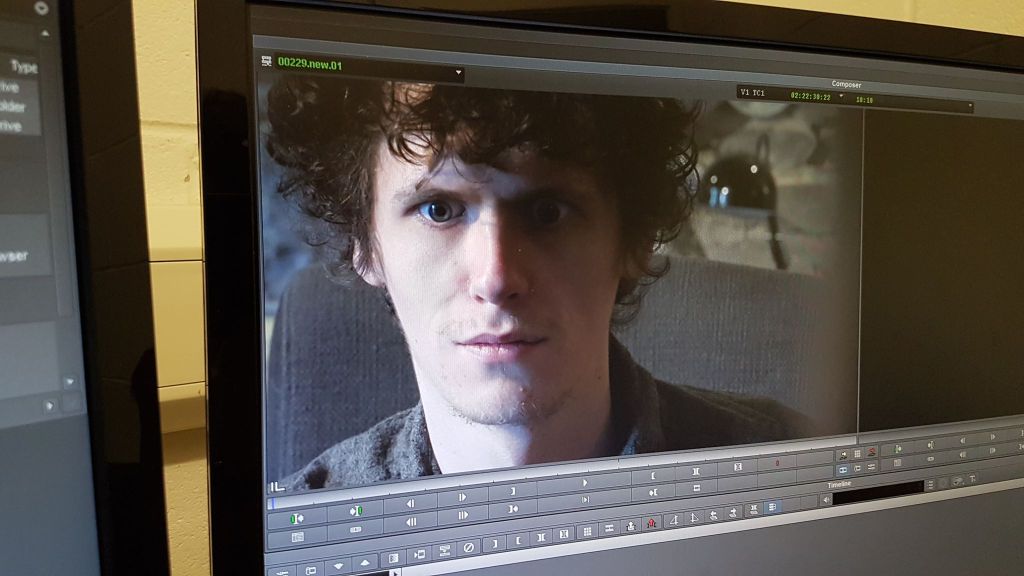
Editing
In our 6th and now final week I once again fulfilled the role of the editor. This week’s exercise was to create a dialectical montage, which is an editing style that calls attention to itself through quick cuts and opposing images. This editing style, created by Sergei Eisenstein in the 1920s, allows for interest ways of storytelling and brings its own challenges. With that my role as the editor was very crucial (of course, without devaluing the essential work of the crew).
Our idea was to tell a story revolving around the myth of Sisyphus. In Greek mythology Sisyphus was punished by pushing a massive boulder up a hill, only for it to roll down again and having to repeat this process for eternity. Korneliusz our writer and director for this week wanted to show this endless and always repeating struggle in relation to other events, to evoke meaning through this theme. Since we had an extra week for preparations, we decided not to use archive footage (which is often used in dialectical montages), but to shoot everything ourselves.
The approach we decided on for this exercise varies from the typical dialectical montage. We chose to flash out two story lines instead of cutting between a lot of different footage, in order to show the actions of the two characters more clearly. Through this, the connection between the two story lines became more explicit. If we had used a lot of additional footage, the themes we wanted to present would have gotten lost or it would have become too complicated. Still we didn’t want to completely disregard the exercise, so we shot a lot of second unit footage in our extra week and kept the camera rolling between takes in the actual shoot to find additional shots, so that I could play around with the montage in the edit.
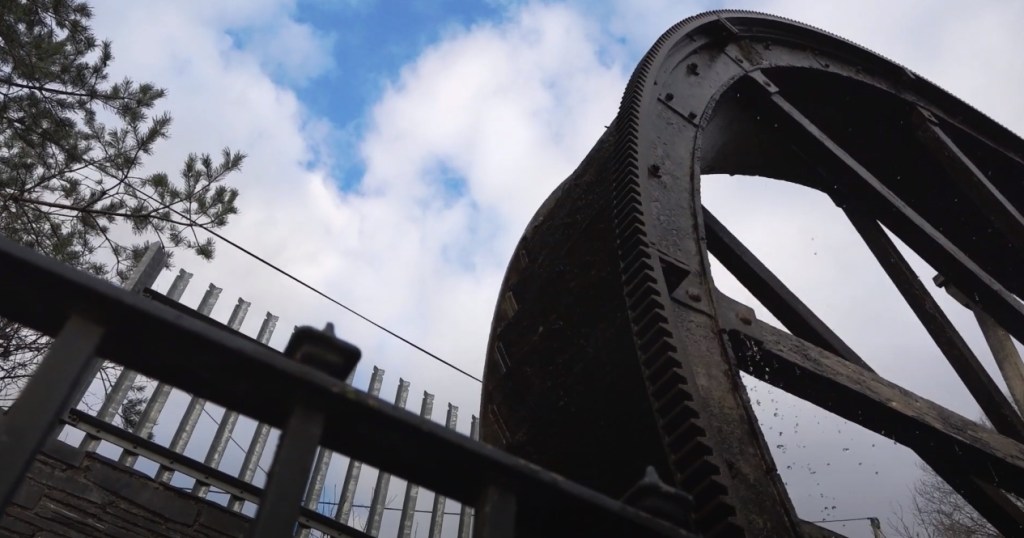
2nd Unit Footage, Water Wheel 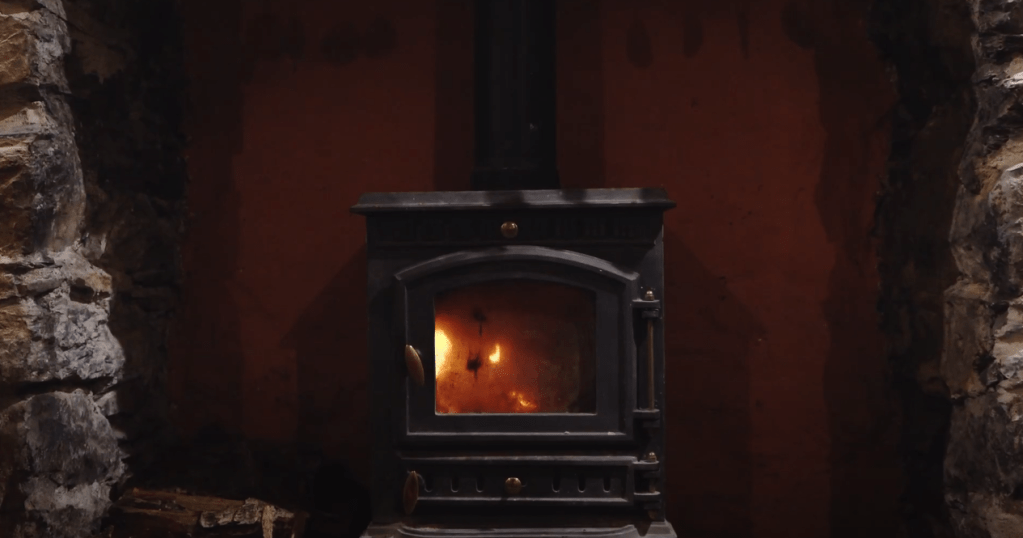
2nd Unit Fooage, Fire Place 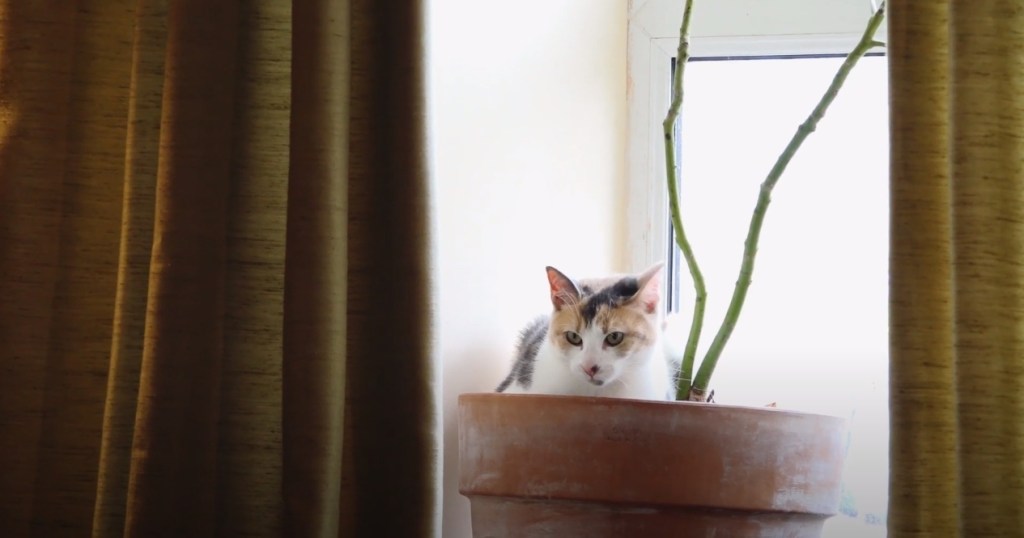
Behind The Scenes Footage, Cat
Because I edited our short film in week 4 and I also had more practice from the Post Production and Editing module since then, the use of Avid Media Composer felt much more comfortable to me this time around and thus the editing itself went much smoother. Due to that and preparation such as watching the footage beforehand and setting up bins, I had a lot more time for the editing itself. This was crucial since experimenting with the structure and when to insert additional footage is key to creating a great montage. I tested out inserts of the second unit footage and the behind the scenes footage, in order to find moments in which they were given the meaning that we wanted to convey. For example, the ever-continuing water wheel representing the always repeating mundane process of the artist and Sisyphus.
However, finding the right timing proved to be quite challenging. I wanted our short film to stay as close to a dialectical montage as possible. But since our approach carried a dramatizing effect with it, this was difficult to achieve. I tried to edit our montage to a music track, with the purpose that it builds a faster pacing. I did this because I thought this could help push the notion of a fast cut dialectical montage. Finding the right track wasn’t easy though. I chose to use The Belt of Faith by Jung Jae-il from the film Parasite (2019). Overall, this was quite helpful, but I do think that the music slows down too much in the middle. If I was to re-do it, I would probably use a different music track that keeps building up the momentum or remains at a steady pacing.
Conclusively, I’m still satisfied with the result of my edit. I improved quite a lot in the use of Avid Media Composer and I definitely look forward to doing more editing, which is surprising to me since I was not a big fan of editing coming into this semester. A dialectical montage is made in the edit and so in this week’s exercise I really got to see the experimental nature of editing. At times, finding the right way to assemble a scene turned out to be a more challenging task than first imagined, but ultimately you gain a lot of experience from it.
Final words on my experience of this “boot camp”
Over the course of these six weeks I learned a lot about filmmaking and the unique roles. The sentence to sum it all up perfectly is Learning by doing. It was a great experience to work with my crew, as we spent countless hours planning, arguing, shooting and editing together. I feel confident that I have a better idea now, of what it is like to work in the film industry, be it as an editor, as a producer, or in another role.
Unfortunately, due to the current situation surrounding the coronavirus, our “filmmaking boot camp” got cut short by two weeks and we didn’t get to conclude our plans for the next two films. With the current situation, I’m especially grateful that I got to learn a lot about editing and found more appreciation for it. With film sets staying closed for now, editing is one of the few tasks that we can still carry out without much of a change, and so I will definitely continue to work on improving my editing skills.
 Diet Coke Productions