Sound Design
In Week 3 our short film Highly Recommended revolved around a Mise-en-scène exercise that portrays an encounter between two people. Instead of a comfort role like last week I wanted to do something that I haven’t done before, so I chose to be the sound designer. Of course, Mise-en-scène focuses on what is in front of the camera but sound is still just as important for a film, or even more important than the picture as Rod Munday always says.
The encounter in our short film is between a hypnotist and his new client, who doesn’t believe in hypnosis but decided to try it as a last resort to end his fear of spiders. As the obscure hypnotist gets to work, he puts the client in a trance and starts to use this vulnerable state to get his banking information and steals his money.
This week we already got access to the exercise information on Tuesday, so we had a few more days for pre-production than in the last week. That was very helpful since we were able to hold additional meetings to discuss our ideas and to plan the shoot. I talked with Juliette, our writer and director this week, about the atmosphere she wanted to create in this film and if she already had any specific sound elements in mind. At first, she wanted a very serious approach to the story and have the atmosphere feel corporate, as she said. After brainstorming ideas, we concluded that a more mysterious, almost eerie approach would fit the story better.
One of the rules for the exercise was that we shouldn’t use music. We wanted to be a bit rebellious and found a way around that by recording our own soundtrack. To create the eerie atmosphere, we searched for exotic instruments that we could use. When we searched the prop room, we found a rain stick and other instruments. Unfortunately, they didn’t quite fit the soundscape we had in mind. Luckily, we were able to find others such as a concertina, which produced just the right bizarre and stretchy tones, and a singing bowl, which is actually used for certain therapies. The variety those two instruments offered worked well for the soundtrack I wanted to create in order to fulfill our atmosphere.
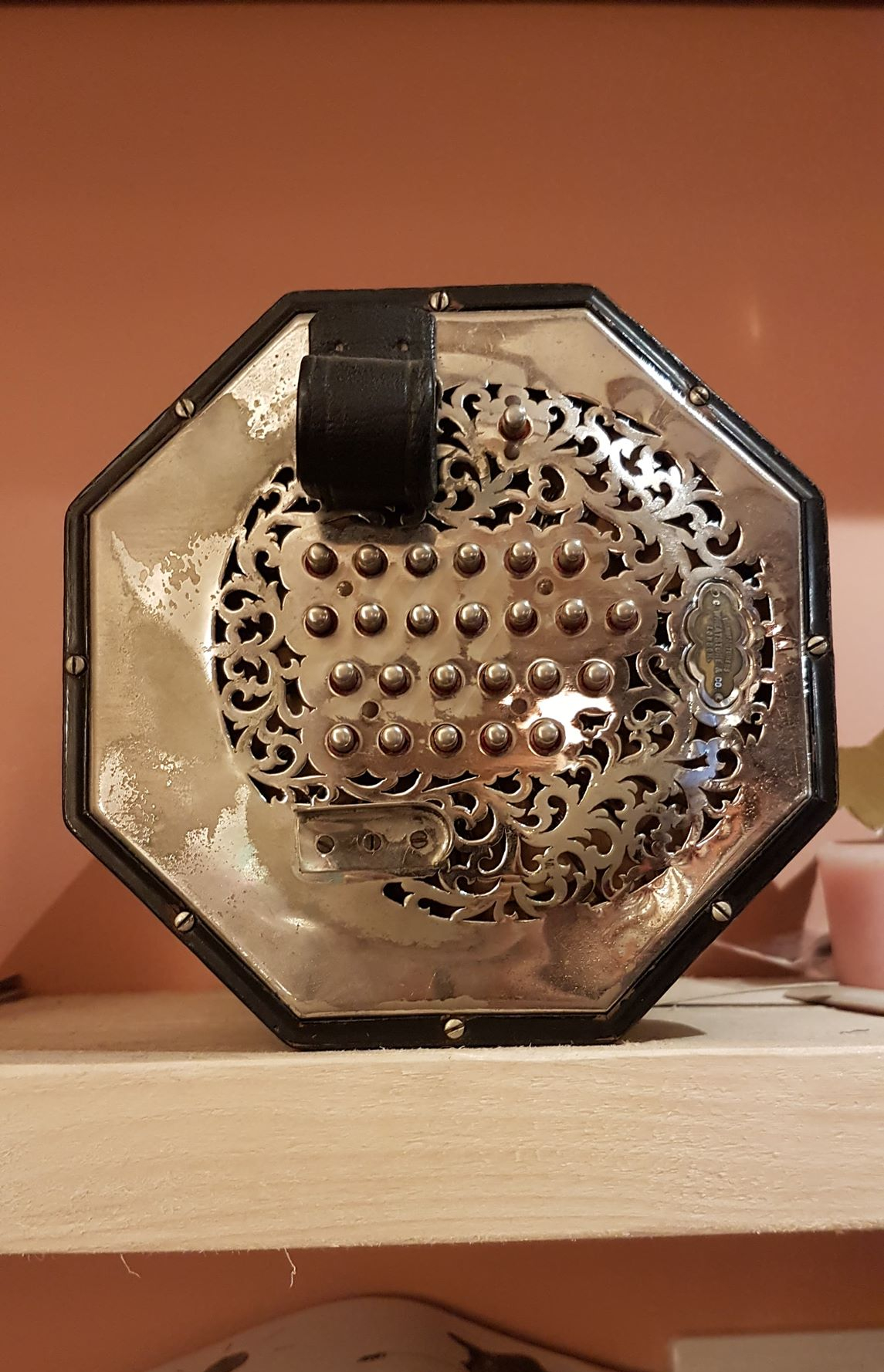
Concertina 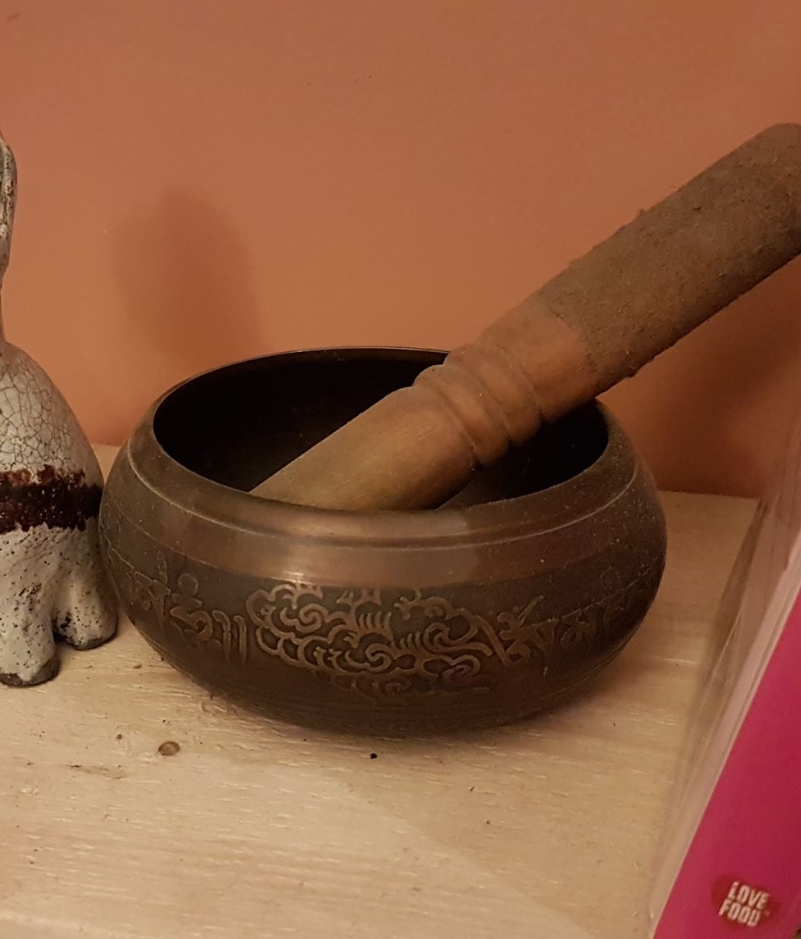
Singing Bowl
While the soundtrack fits really well for the atmosphere we were trying to create, I do think that we could have done a better job with the sound mix. With the limited editing time and the picture lock having priority, the time remaining for the sound editing is very short. That makes it difficult to create a proper sound mix. With that in mind I do think that our sound mix was satisfying but there are definitely things I would improve next time. For example, the sound level of the dialogue is a little uneven between different shots. And the first time we hear the singing bowl, it carries too far into the scene and with the client looking around the room it almost makes it seem like the sound is diegetic. That could set the viewer up for false expectations which is not what we wanted in the first act of the film.
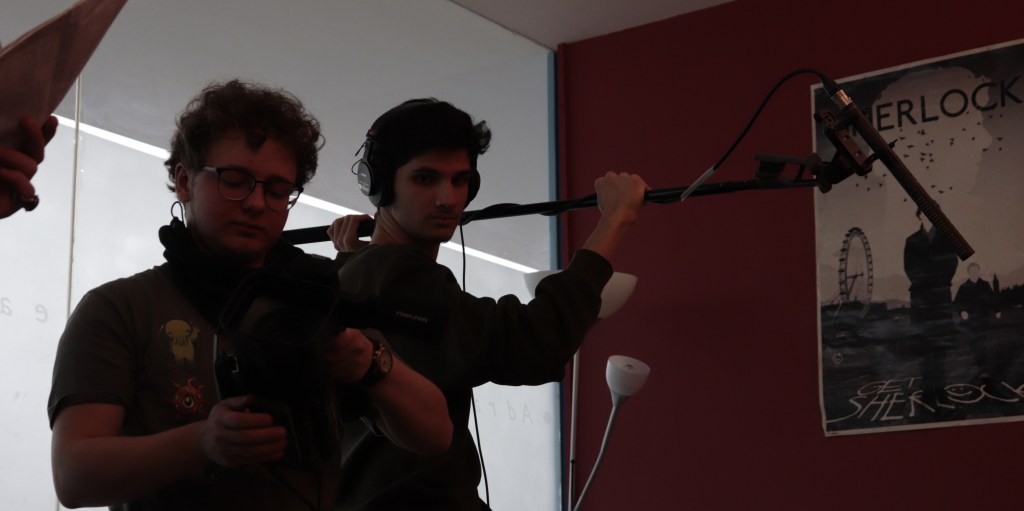
Korneliusz, Cinematographer (left); Tayjib, Boom Operator (right)
Since I haven’t done any sound design or boom operating before, except for basic training exercises, this week was a big learning experience for me. It was much more challenging than I expected it to be, especially operating the boom microphone. It requires a good ear, calm hands and patience. Holding up the boom for longer periods of time can get exhausting but you cannot get lazy or else the sound quality suffers immensely. In that regard I learned to appreciate and respect the boom operator even more and I also learned how important the sound mix is. Slight mistakes can ruin the sound and make even great pictures unwatchable.
 Diet Coke Productions