Editing & Producing
In week’s 2 theme we needed to create a situation based on breach of trust, and think how the mise-en-scène would affect the story and create a sense of space and personality. One of the things carried over from lasts week learning curve was the idea that each character should have a personality and it should be portrayed as soon as the screenwriting. So, one of the things we tried to think of were how each character was, and how they’d be portrayed. My role’s in this weeks exercise was Producing and Editing. So, why should, as an editor, be stressing the importance in how an actor portrays his character? For a fairly simple reason: a lot of the acting comes from editing. Of course that the actor has it’s own merit, but depending on how an editor cuts and positions shots and scenes, it creates a wholly different emotion and tone. And, he also selects which shots are in the movie, with the help of the director. So, some actors, like Joaquin Phoenix, are famous for doing various interpretations for some shots, which, depending on the way the director handles it, create opportunities or losses in post. Opportunities such as a bigger variety of expressions, and losses such as continuity errors.
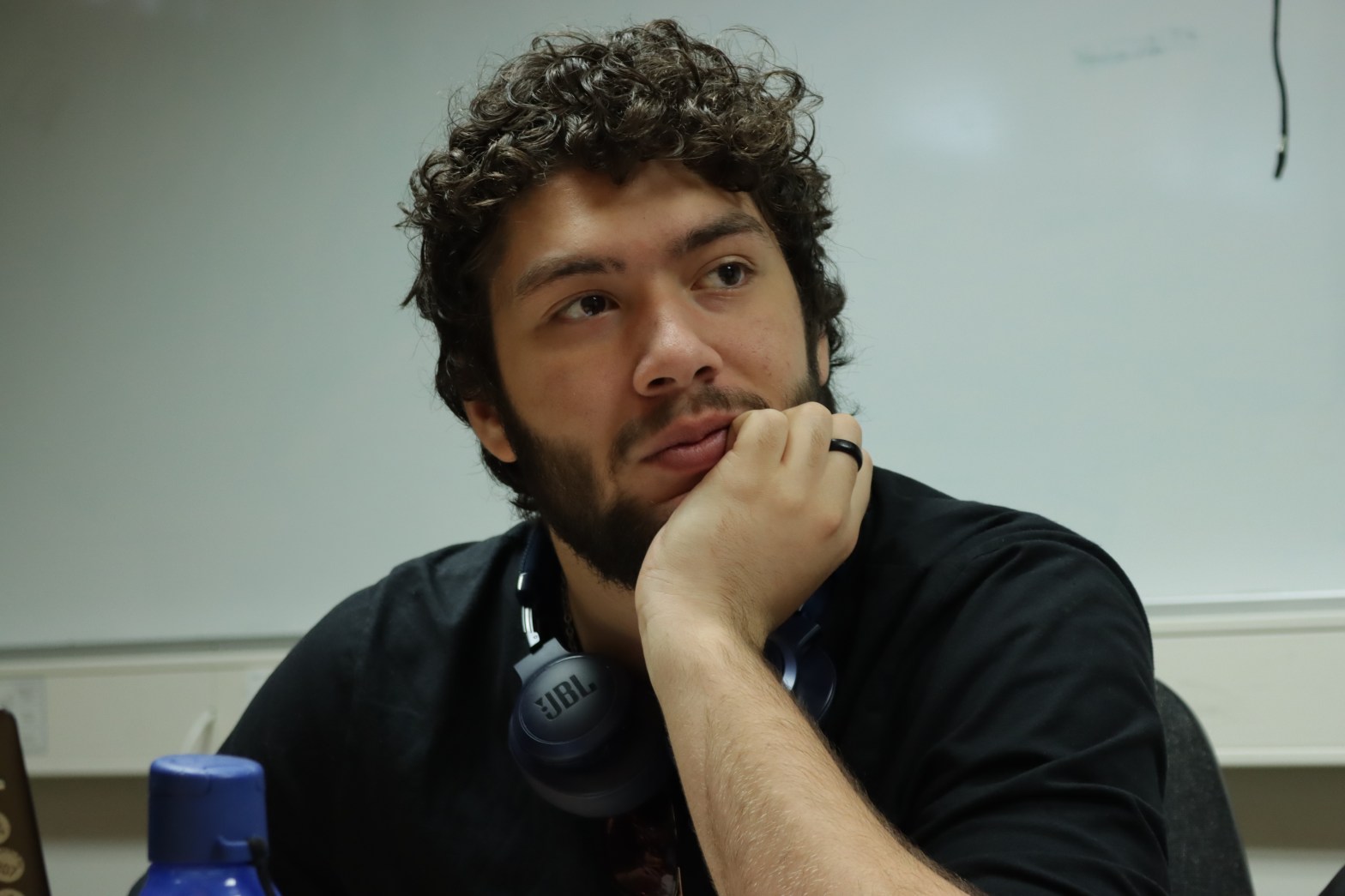
I always liked editing, ever since I had a English project in my school and I was the only one interested enough to do something real. So, I’ve always been very particular when it comes to timing and cuts, like, really particular. Every frame matters. I could spent fourteen hours editing, as I have before, and I wouldn’t complain about it, unless something like the whole system crashed and nullified all the work I’d done. But, you know, that sometimes happens.
I never had a very structured way to edit the shorts that I was a part of, so finally having a go at creating different files and folders for everything had this weird charm. I felt like a professional, in a way. Even to the point where I could see which shots worked for each interaction or beat that the story had. For example, the beginning of the short was supposed to be just the two talking, changing from wide to wide. There was no inherent problem with that, in the sense that one could understand the story about the same. But we were thinking as someone who knew exactly what was happening in the scene, which the audience wouldn’t at first. Even the whole singing bowl playing was a way to introduce that mystery of “what is happening?”.
Every single minute of editing had some kind of discovery. Even the ending, where we were supposed to see Aaron character’s waking up we just thought: “it’s done, there is no more story to tell”, so it just ended with the same sound that it began, and the hypnotist’s face framed as the forceful and scary person that he was. What I’m getting into is that every single motivation during editing had a reason for it. Pacing: at the beginning it starts normal, as the character is trying to talk to the hypnotist, then as it gets to the countdown it shifts for something rhythmic. Then it slows down as the hypnotist takes his time to open his briefcase and take his card.
I didn’t like how the project was coming together at first. Even knowing that Juliette had a very clear vision to the whole project didn’t help that feeling. I couldn’t see the bigger picture. But whilst editing, that changed. I learned another important lesson: Editing changes everything. Every shot and every sound I was putting together just made me realize the visual of the entire picture more and more. And not necessarily by my editing, but through the entire process of film. It was a blast all the way through.
Producing
So, yeah, just by the contrasting sizes of both texts you can get what is happening. I’m not going to lie,: producing is not my thing, even though it is one of the most important aspects of filmmaking. A producer is the person who sees the whole ordeal, from financing the film, to assembling it. It is vital. With that said, almost half of it is planning, and doing assessments to see the production through. Which I’ve managed to do, but can really tell that it’s not my strong suit.
I sought for us to have The Cwtch, a communal space in the department, and the props for the short. Getting them was fairly easy, as the props were lent by the university, as was the equipment. As everything was already set up by the day the shooting took place, as there wasn’t really a lot to, um, produce, I became more of a b-roller than anything else.
 Diet Coke Productions