To address the pandemic once more it was a pity our plans were cut short, very few foresaw it, and those who did were laughed at. I had never seen the world in such a state, just like a bad cut in a film the illusion of order was suddenly broken, revealing all the laws to be just a bunch of fragile scaffolding supporting an even more fragile society, now suddenly unable to be sure of anything, and forced into thinking just of today. An invisible enemy struck the world and took our breaths away, all that in a span of a bit more than a month.
There were a few good things about it though, very small things but it’s still something. It was amazing to look at the world turn to the internet, suddenly everybody reached out for the arts, for books, for music, for games, for film. The world is battling loneliness like it never had to before. And while the healthcare workers fight for our lives, artists fight for our mental well-being. It’s good to be seen once in a while.
Overall to conclude my work on the module, I think I did my best as far as the day to day reality made possible. I definitely put all of my passion into it, lots of thinking, lots of planning, and an ocean of lessons to learn.
Next time I’ll focus much more on a healthy and efficient working process, I will try to argue a bit less (although no promises), and I’ll keep on being fascinated by the art and craft of film. I hope to catch all of the modules, I hope it will be possible, I can’t choose one out of cinematography, editing or sound, completely impossible.
Thank you, Juliette, Pettrus, Tayjib, Aaron, and Daniele for being an outstandingly creative and wonderful team.
Thank you, Elin, Rod, Siencyn, Tom, Jon, and Huw (and every other member of the staff whose names I don’t know) for this amazing module.
And see all of you next year! Stay safe.
(Is this appropriate? Technically this is a part of an essay? Is breaking of the 4th wall allowed?)
This week I was a director, and I have a mixed bag of feelings about it. On one hand I finally had a chance to tell my own story, on the other hand I went with the first thing I had in mind, which I dislike doing. I feel like it could have been developed more. Poor timing too, as exactly the time I was working on the story I had a dense brain fog and a minor case of a creative block.
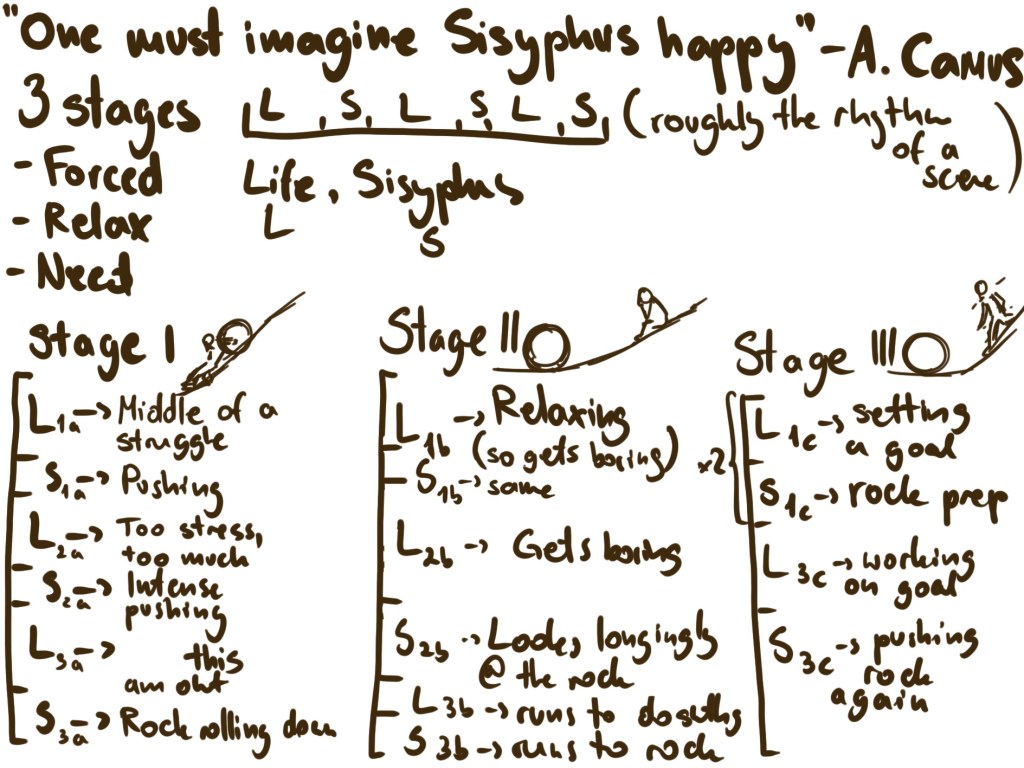
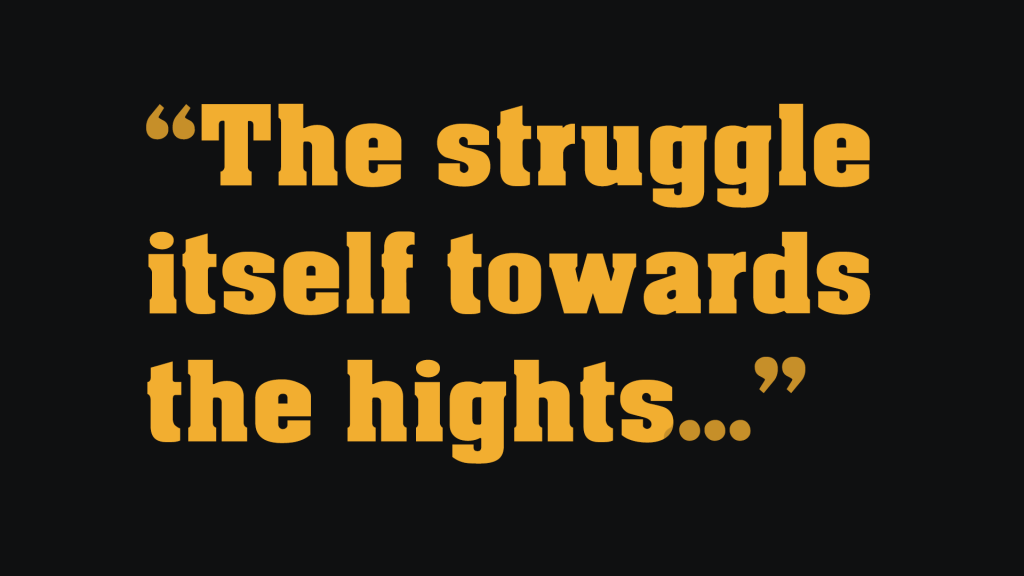
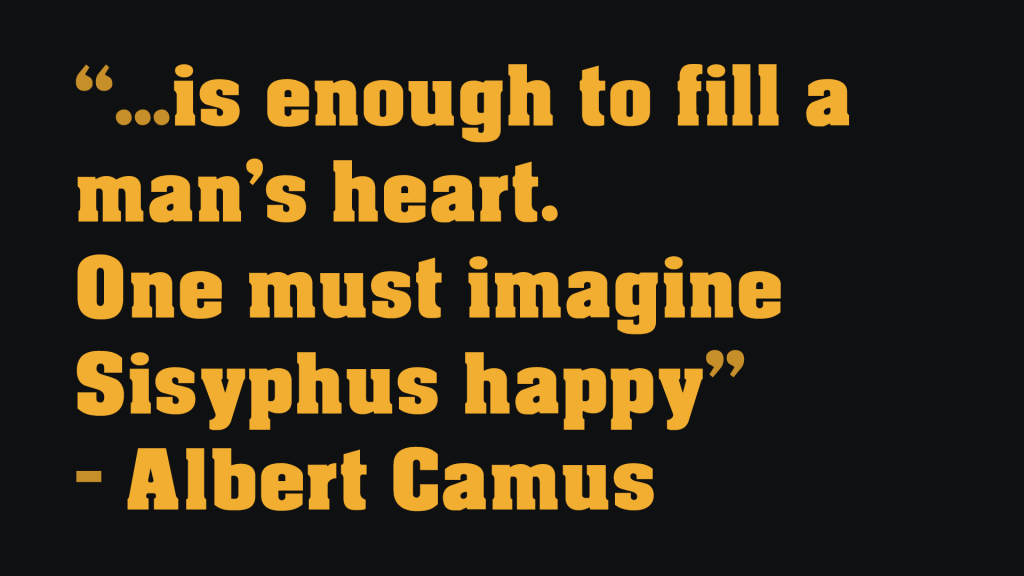
As for the idea, I chose to base it on an essay by the French philosopher Albert Camus The Myth of Sisyphus. It’s a short reinterpretation of the Greek myth that shows Sisyphus as more than a person living an everlasting punishment. The famous quote “One must imagine Sisyphus happy” is often left without context, and might be confusing “why exactly is he happy?” you might ask, the full quote makes a bit more sense: “the struggle itself towards the hights is enough to fill a man’s heart, one must imagine Sisyphus happy”. He’s just living a life like every person on Earth, just a bit more simplified, he’s everyone of us.
Ultimately I don’t think I managed to tell the story I wanted well enough, it’s there, but lacks context; it makes perfect sense if you read a 5 page essay beforehand but then what’s the point of it, you could just read the essay.
Nobody but Juliette got very engaged either. I don’t really know if it’s my fault for being too soft of a person to give out orders or their fault for not being interested in this project? I’m pretty sure they understood the point of the story so I don’t know what went wrong there. Not a nice feeling, to give your best on others’ projects only to be mostly ignored during your turn.
Then there was the shooting, I should work on my leadership skills, probably should try yelling a bit, anything above -12db coming from my mouth probably means I’m on fire.
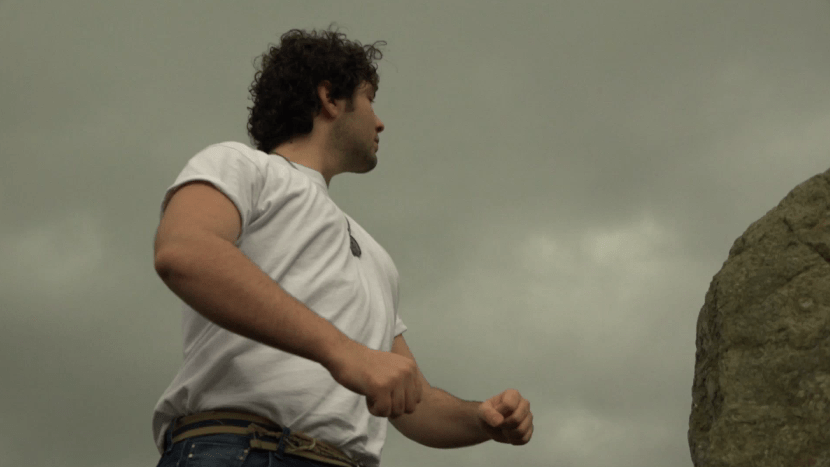
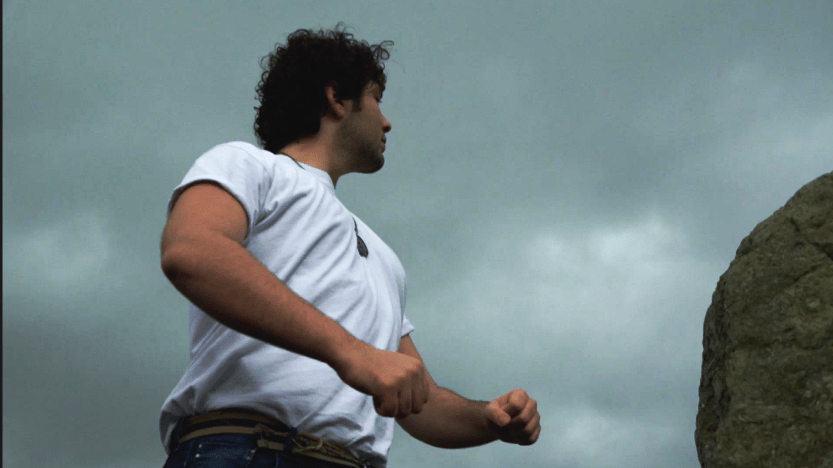
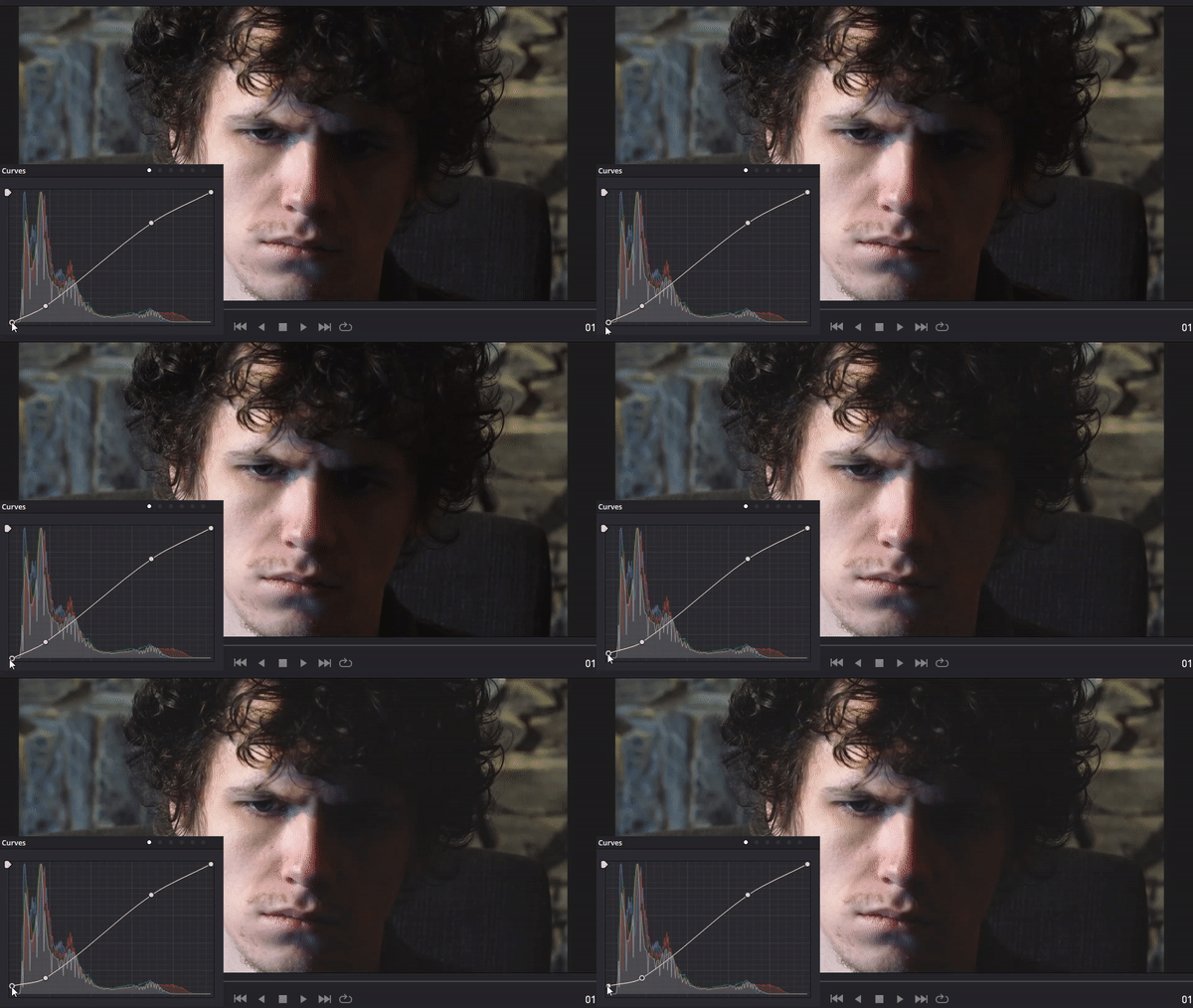
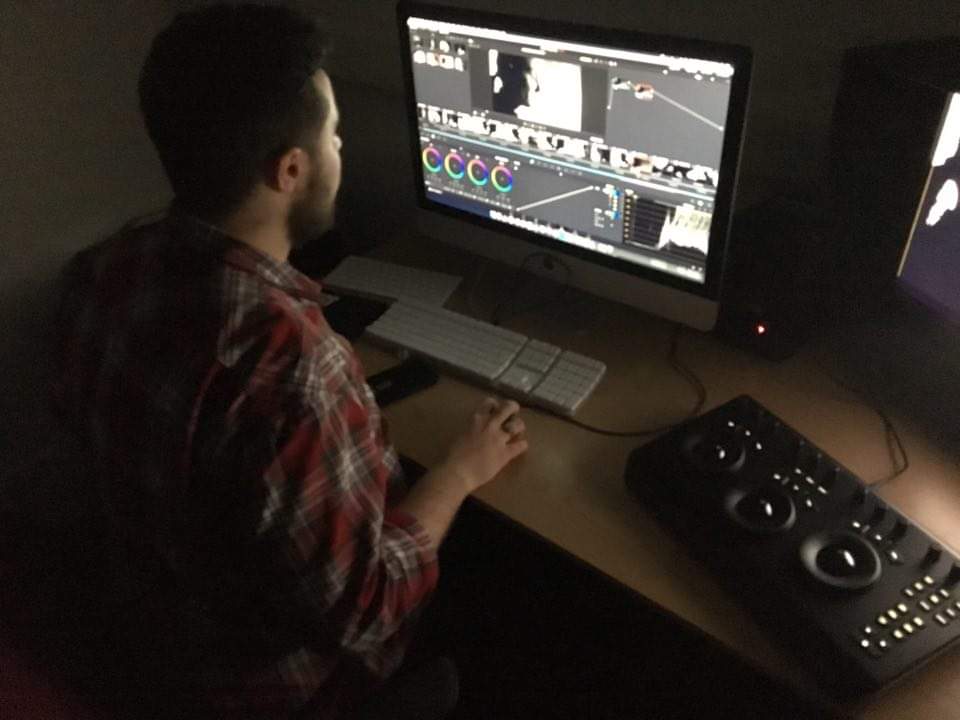
I also did the colour grading on this one! Did it in my room on my semi-professional graphics tablet and laptop so it’s not perfect, but I think it’s quite nice. Apart from Juliette the rest of the group didn’t really like it but heck, I think it turned out very nice! (I have overdone some shots, but nobody’s perfect). Working in Davinci Resolve was a treat, I like Avid but you sometimes have to get through hell and back to make it work, most functions if you aren’t told are there, you wouldn’t even know they existed. Colour grading in Resolve on the other hand – it felt like a glass of cool water on a hot day, the interface was intuitive, if I told it to do something it actually did it, and making titles was incredibly easy!
original
graded
original
original
graded
graded
During the colour correction I aimed at a balanced and neutral look with a bit of a touch of my own. We had some drastic light changes and yellow skies in several shots, I fixed those as far as I could. Personally I dislike pure black in most places, it doesn’t really exist in nature and unless I’m trying to create something unnatural deliberately I drag it up a bit on the curves.
No looking back this time, as I’m adding a lot to the initial notes long after I’d written them. I do have a good excuse though, a pandemic happened! Yeah that was definitely the last thing I thought would happen during my first year at uni, I honestly thought a nuclear war would be more probable. Even though most of us were still around Aberystwyth before the spring break, we were too panicked and emotionally exhausted at that point to think of filming, a lot of things happened in very few days. A constant stream of bad news isn’t good for creativity, take notes to make realistic pandemic films for later but don’t do it whilst it’s still on its way.
This was our fifth film and that means the specific roles we had been swapping each week ended up landing on those people who had been thus far avoiding them. The pressure of letting others down while you try a role you are less sure of or don’t have much experience with building over the weeks. I was looking forward to getting the chance to be Cinematographer though perhaps a little nervous if I would be able to do a good enough job having not used the cameras since December.
I was especially excited about the prompt, and the fact that we had an extra week with ‘Reading Week’ in between. I borrowed a camera to practice with for the week and was looking forward to getting some secondary footage to make our montage as uniquely our own creation as possible.
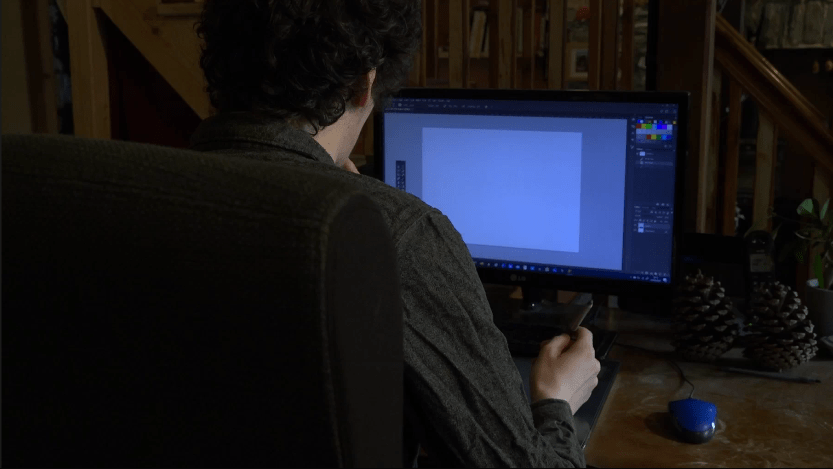
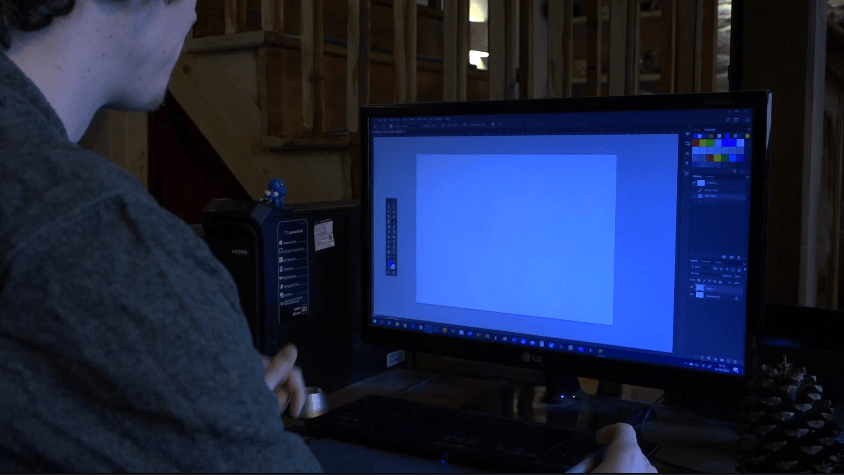
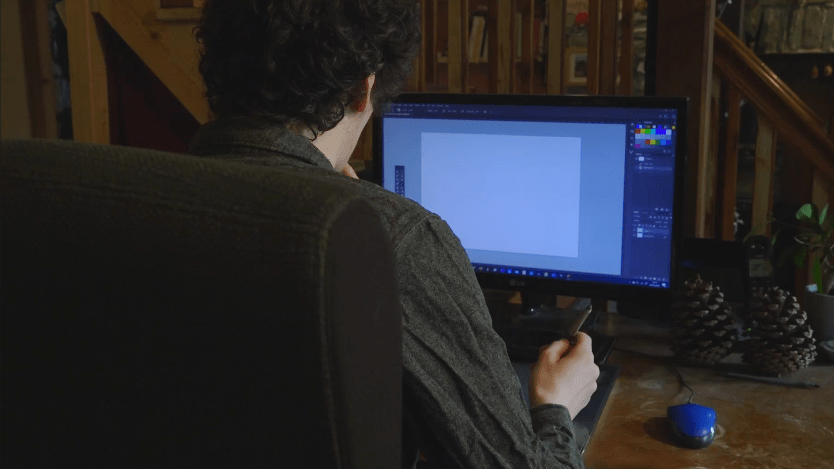
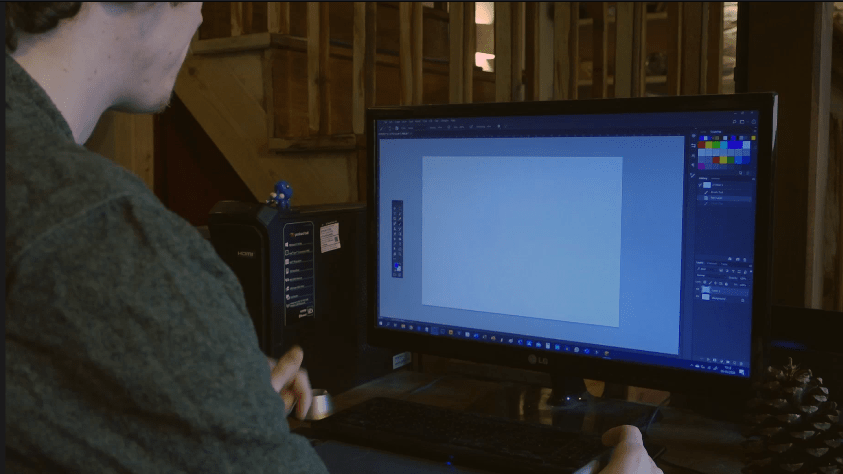
Korneliusz was Director and I really loved his idea of telling the Albert Camus’ interpretation of the Sisyphus myth crossed with an Artist at work, getting a block and then again getting back to work. This was exciting to me on several levels. It told the Sisyphus story in a way I had not heard yet before. Something a lot more relatable and human. Not pure suffering but as life in balance. Also, I absolutely loved the direct comparison of hard physical labour with the work of an artist. As an artist, having to justify for my entire life that what I did was work, I felt vindicated in a way to get the opportunity to unapologetically depict it as hard work.
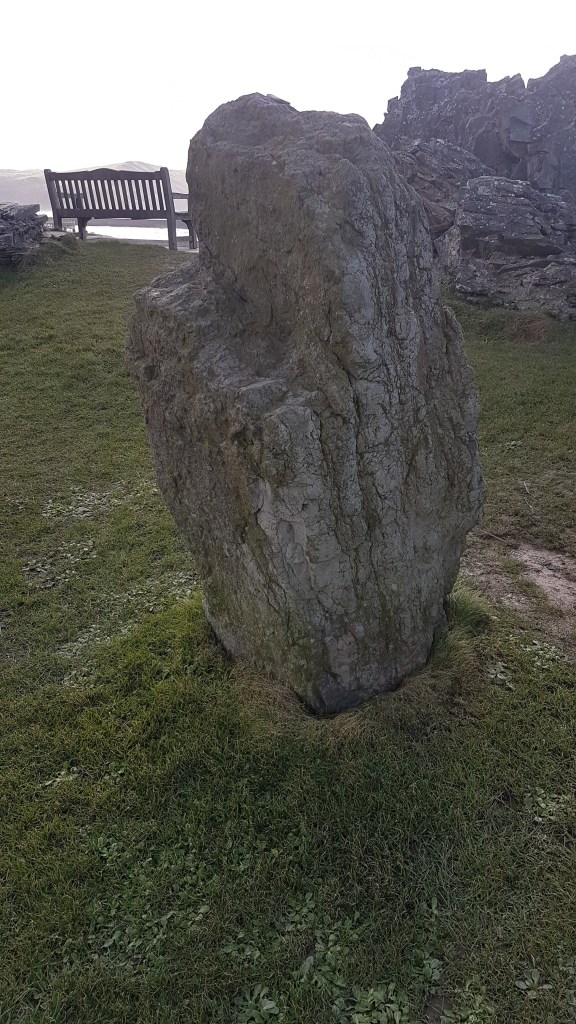
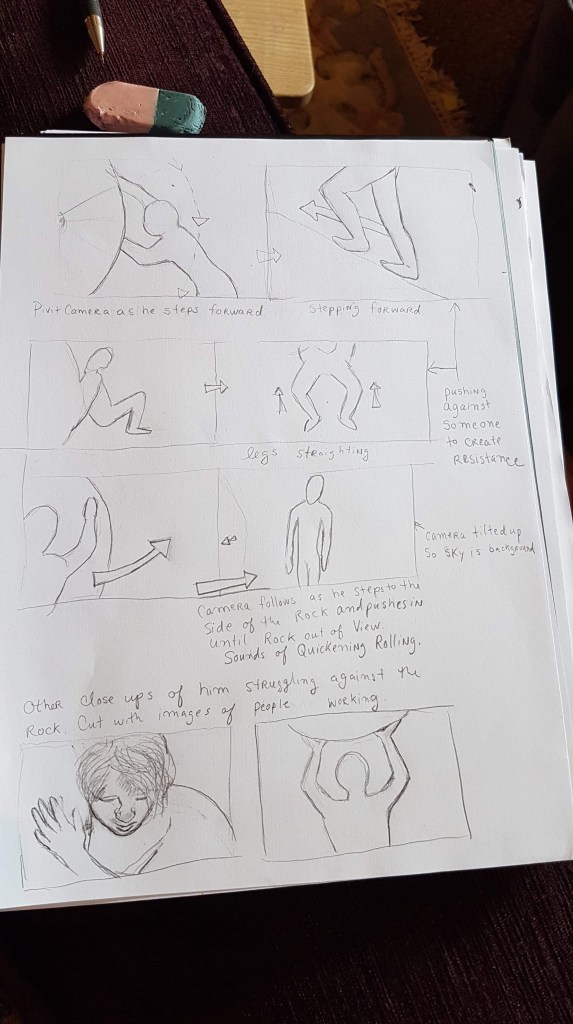
After the weekend we got together to discussed how and where we would film it. We decided, with the two very different locations, it would be better to try to film the Sisyphus footage on a separate day to the Artist in his home. We arranged with the group to film on Saturday with Aaron acting as both Sisyphus and as the Artist to make the parallel more obvious and more figurative. Less of a physical representation of Sisyphus but that it could be in the Artist’s own imagination and how he sees himself. Unfortunately, Aaron was unable to film on Saturday so Pettrus was roped into acting as Sisyphus. I had found a rock to pretend to push and planned out several shots including one to make the rock appear to roll and roll away, disappearing down the hill.
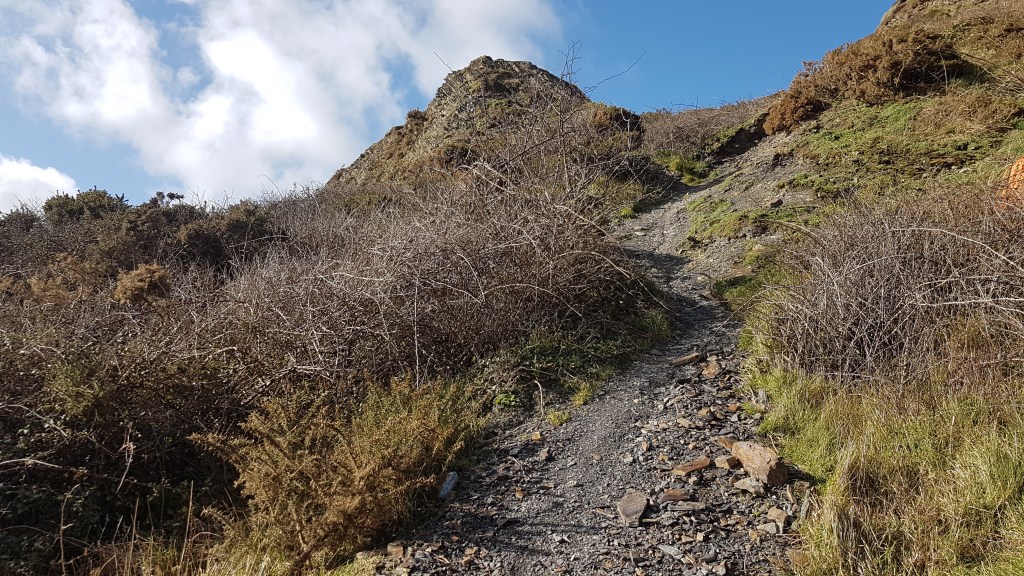
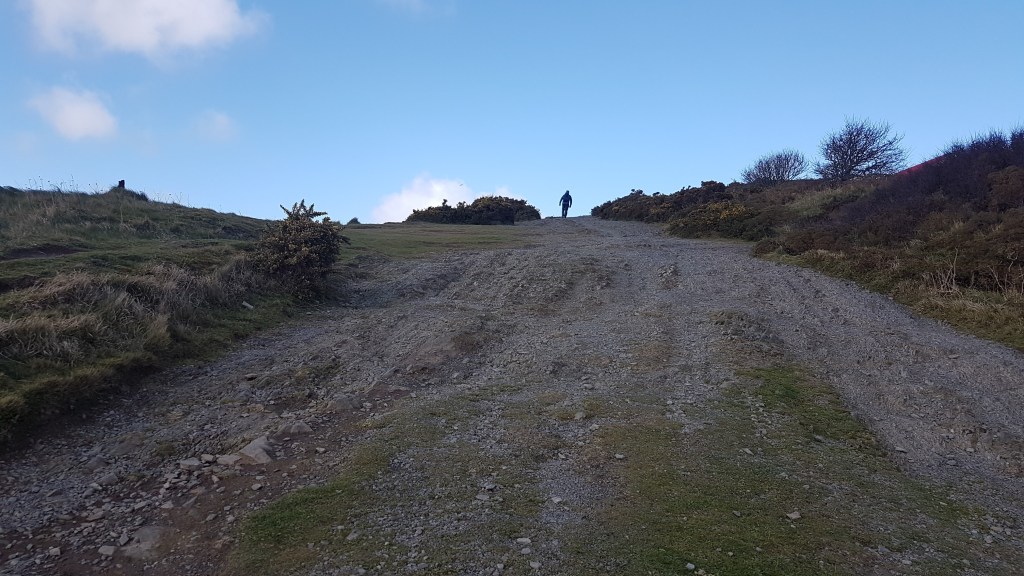
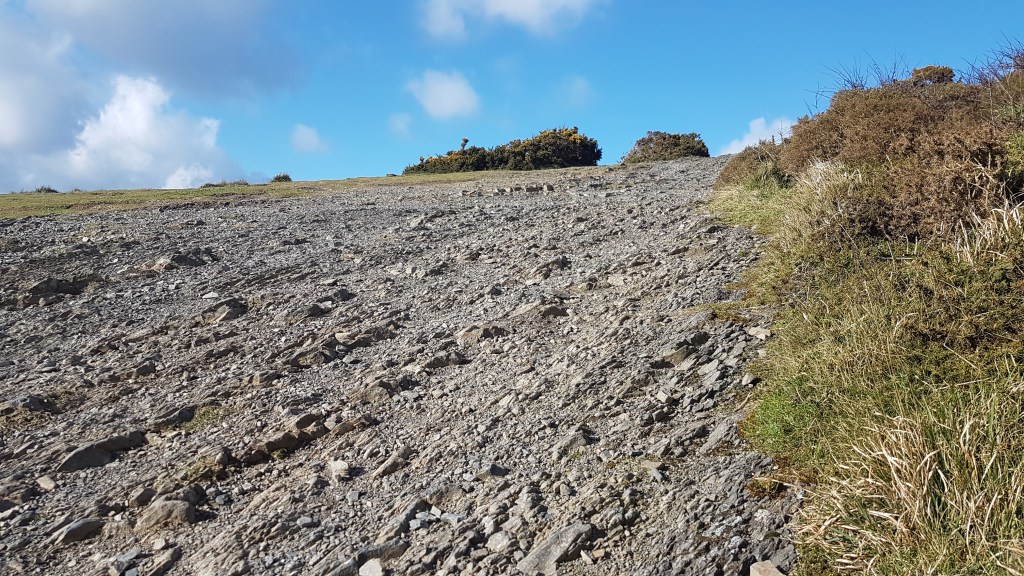
I had also scouted for places to film on Constitution Hill for the ‘walking back down’ scene. We ended up running out of time as we didn’t get to start as early as planned and I had an appointment to get to so some of the shots were rushed and not exactly where I had hoped to film, at the top of the hill, as we didn’t have time to walk all the way up.
On Monday, we had a very relaxed and productive film shoot at my house for the Artist’s scene. We have come to work very well together over the weeks, though we did from the start it only got better as we get to know each others strengths and styles.
There was quite a lot of footage to choose from between the second unit footage I had collected during reading week, the Sisyphus shoot and the Artist at home. Not as many of the shots I had hoped would be actually ended up in the final edit but since the course has been cut short due to the Corona virus and I didn’t get the chance to take on the role of editor, with the permission of the rest of the group, I am working on my own cut.
The lesson of the week has been swallowed up by the turn of events since, I just wish we could have known at the time this would be our last film as I think it could have been truly superb with everyone’s full effort that would have been given to a final film. Thinking of it now just makes me want to cry with frustration and impotence.
In Week 3 our short film Highly Recommended revolved around a Mise-en-scène exercise that portrays an encounter between two people. Instead of a comfort role like last week I wanted to do something that I haven’t done before, so I chose to be the sound designer. Of course, Mise-en-scène focuses on what is in front of the camera but sound is still just as important for a film, or even more important than the picture as Rod Munday always says.
The encounter in our short film is between a hypnotist and his new client, who doesn’t believe in hypnosis but decided to try it as a last resort to end his fear of spiders. As the obscure hypnotist gets to work, he puts the client in a trance and starts to use this vulnerable state to get his banking information and steals his money.
This week we already got access to the exercise information on Tuesday, so we had a few more days for pre-production than in the last week. That was very helpful since we were able to hold additional meetings to discuss our ideas and to plan the shoot. I talked with Juliette, our writer and director this week, about the atmosphere she wanted to create in this film and if she already had any specific sound elements in mind. At first, she wanted a very serious approach to the story and have the atmosphere feel corporate, as she said. After brainstorming ideas, we concluded that a more mysterious, almost eerie approach would fit the story better.
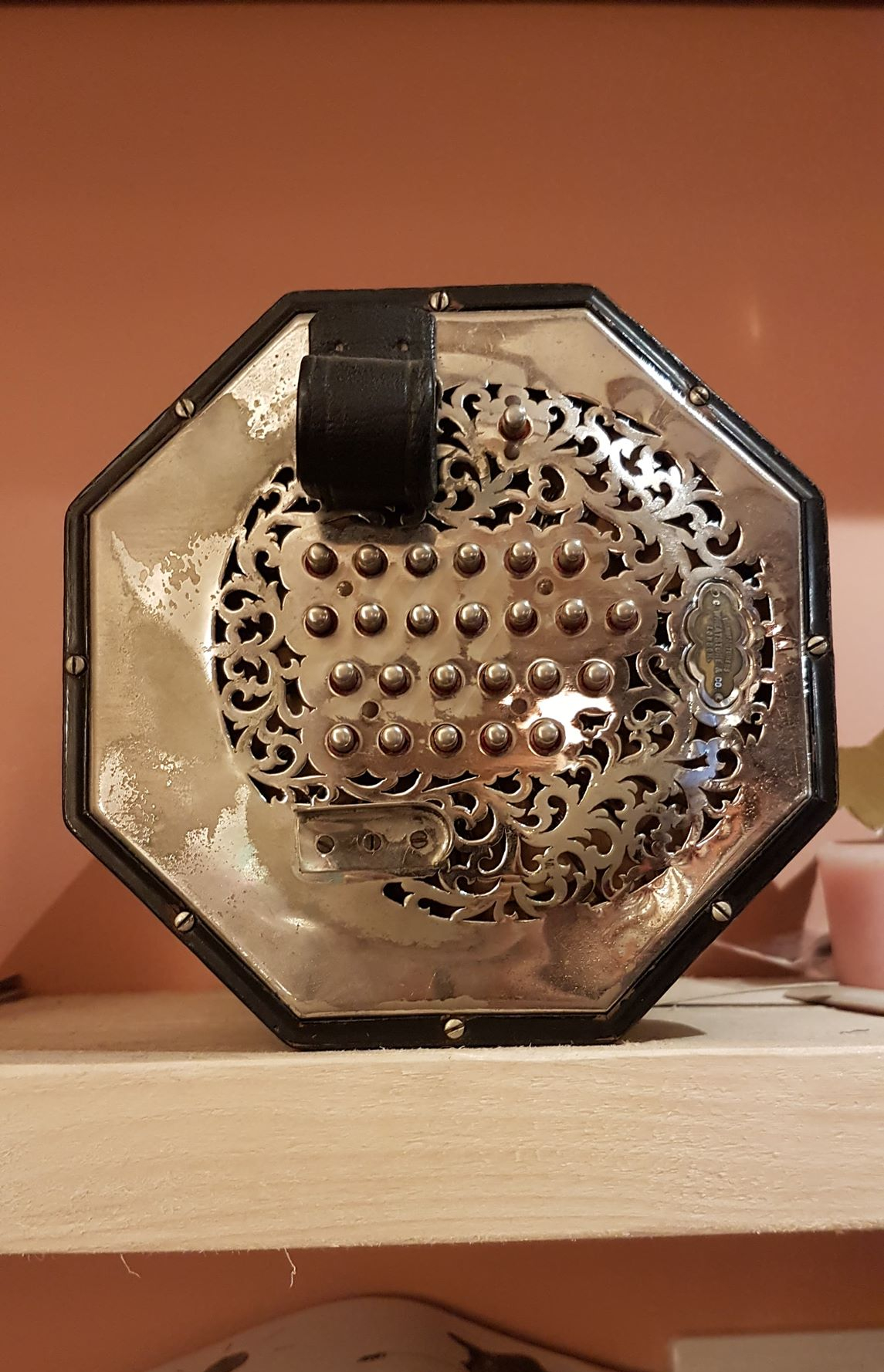
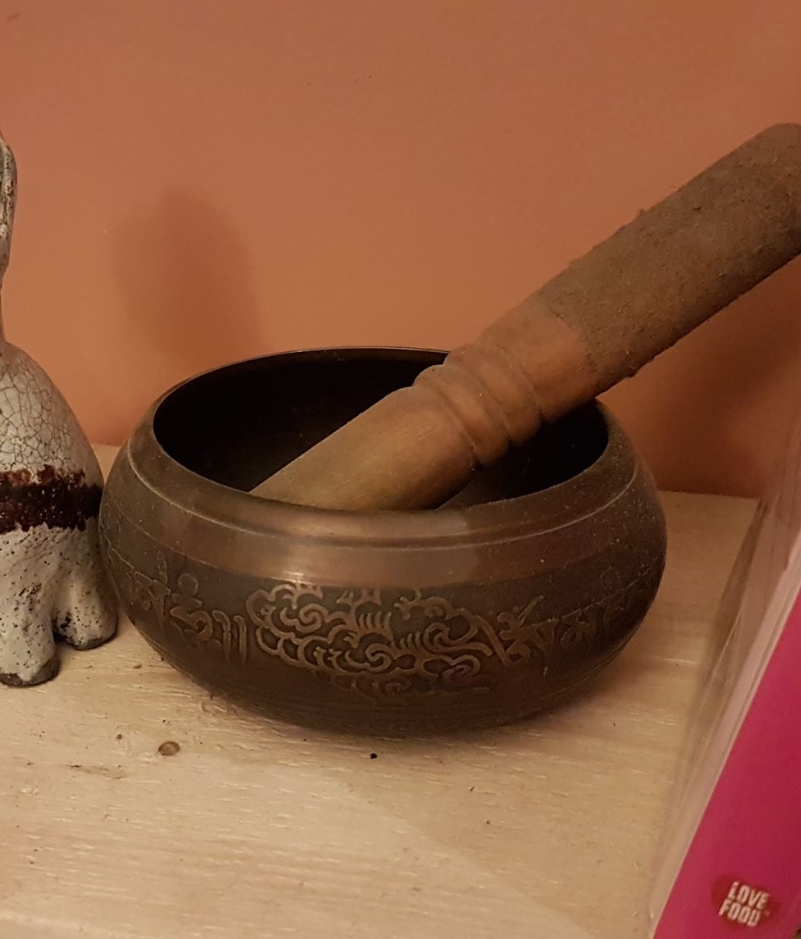
One of the rules for the exercise was that we shouldn’t use music. We wanted to be a bit rebellious and found a way around that by recording our own soundtrack. To create the eerie atmosphere, we searched for exotic instruments that we could use. When we searched the prop room, we found a rain stick and other instruments. Unfortunately, they didn’t quite fit the soundscape we had in mind. Luckily, we were able to find others such as a concertina, which produced just the right bizarre and stretchy tones, and a singing bowl, which is actually used for certain therapies. The variety those two instruments offered worked well for the soundtrack I wanted to create in order to fulfill our atmosphere.
Concertina
Singing Bowl
While the soundtrack fits really well for the atmosphere we were trying to create, I do think that we could have done a better job with the sound mix. With the limited editing time and the picture lock having priority, the time remaining for the sound editing is very short. That makes it difficult to create a proper sound mix. With that in mind I do think that our sound mix was satisfying but there are definitely things I would improve next time. For example, the sound level of the dialogue is a little uneven between different shots. And the first time we hear the singing bowl, it carries too far into the scene and with the client looking around the room it almost makes it seem like the sound is diegetic. That could set the viewer up for false expectations which is not what we wanted in the first act of the film.
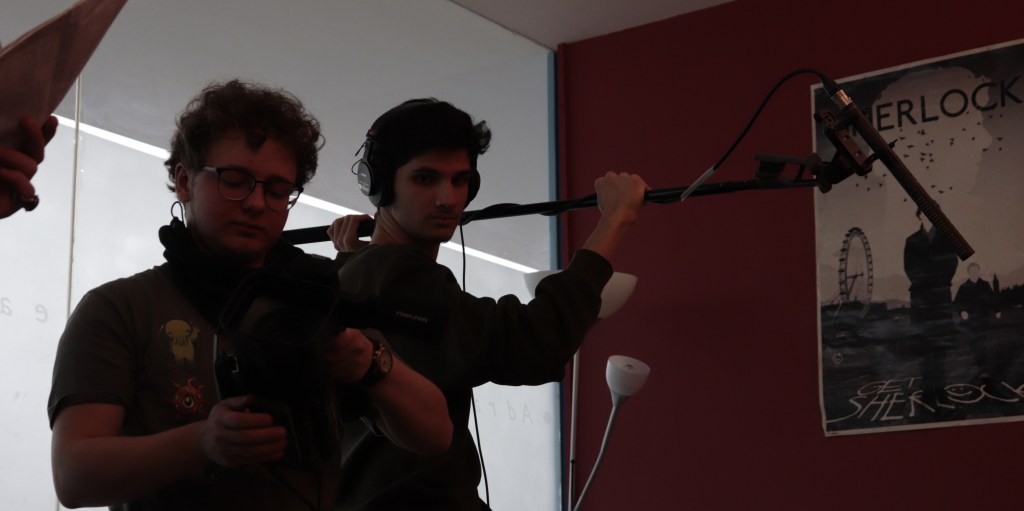
Since I haven’t done any sound design or boom operating before, except for basic training exercises, this week was a big learning experience for me. It was much more challenging than I expected it to be, especially operating the boom microphone. It requires a good ear, calm hands and patience. Holding up the boom for longer periods of time can get exhausting but you cannot get lazy or else the sound quality suffers immensely. In that regard I learned to appreciate and respect the boom operator even more and I also learned how important the sound mix is. Slight mistakes can ruin the sound and make even great pictures unwatchable.
As soon as our group was formed, we jumped into our ideas for the very first short film in week 2 (week 1 was just introduction). This week’s short film was a No Dialogue Exercise with three themes to choose from: 1. The Chase, 2. Pickpocket, and 3. Late Again! As we got to know each other, everyone quickly threw in their ideas and we debated which one would be the best, the communication was quite good from the beginning.
Eventually we decided on Late Again! with the premise of a person attending a job interview and as he waits, he feels the urge to go to the bathroom. The interviewee has diarrhoea in the bathroom as the interviewer walks in and starts to snort cocaine. Both notice each other’s embarrassing activities while only being able to see each other’s shoes under the door separating them. As the interviewee arrives late, they realize who is standing in front of them.
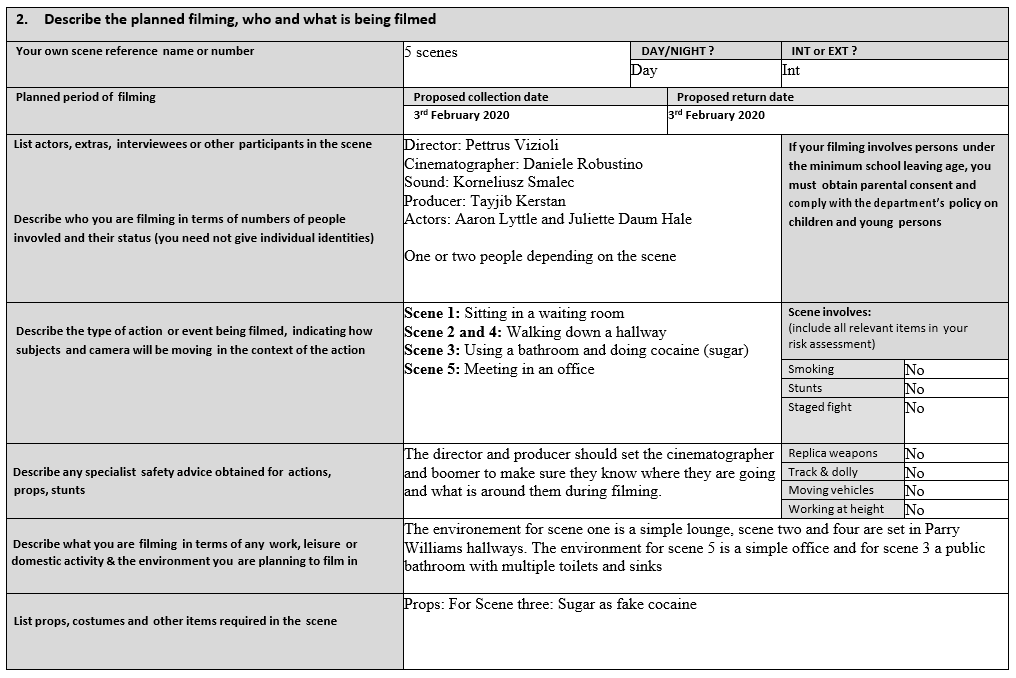
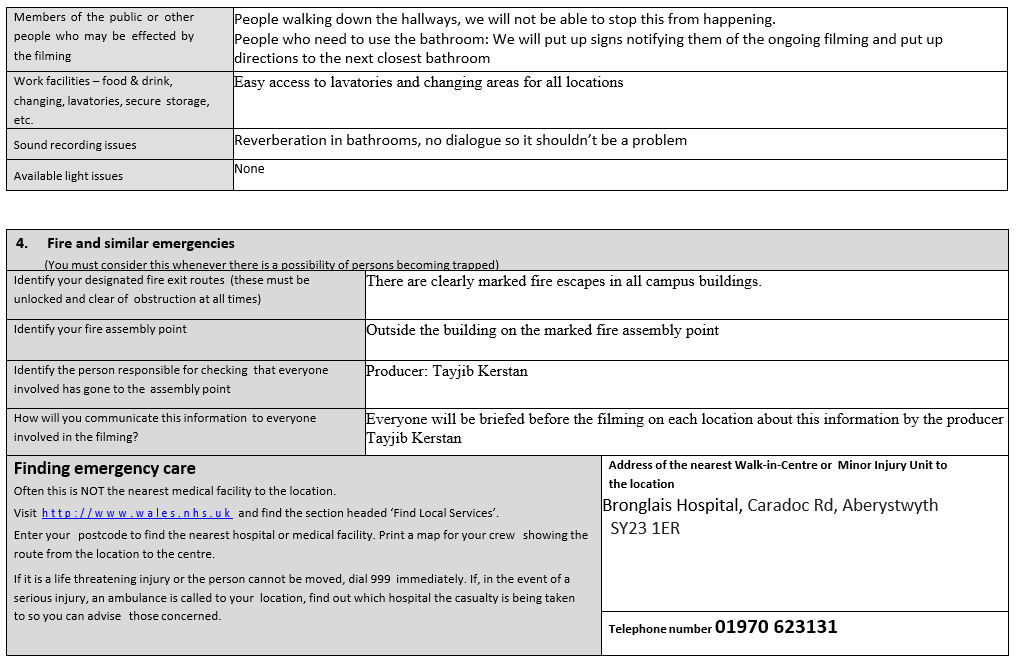
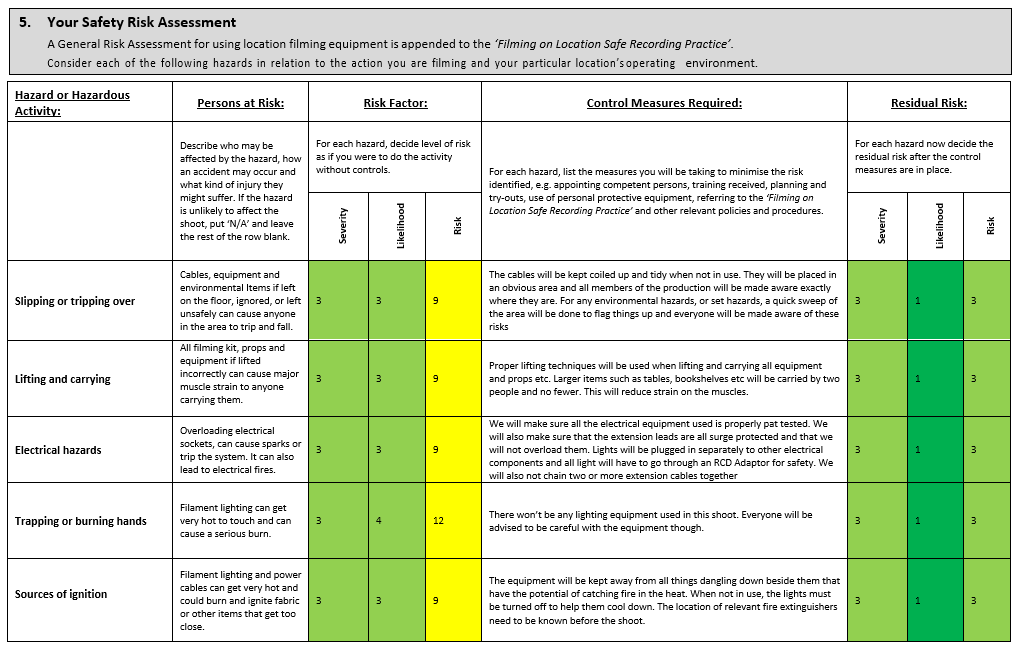
When it came to distributing the roles, everyone gravitated to the ones in which they already had experience from our short films in the first semester, in order to feel more comfortable for our first shoot. Thus, I chose to be the producer, to once again put my organisational skills to the test. One of my most important tasks was the risk assessment. It is absolutely essential for every film production and assures that the cast and crew stay safe during the production and that no equipment gets damaged. It is very important to think ahead for everything that could factor into something going wrong during the production and to take precautions, so that even if something goes wrong everyone stays safe and the shoot can still be successful.
Risk Assessment, page 2
Risk Assessment, page 4
Risk Assessment, page 5
The risk assessment in itself is not very challenging, but it is time consuming since there is a lot to consider. It is important to prepare it as good as you can. Though with every production you learn new things and get a better sense of the different risk factors and what control measures are most effective.
Another one of my tasks was the production schedule. Due to previous experience as a producer I was already familiar with the different challenges that come from the time managing aspect of a shooting schedule. However, because we only had 2 hours to film everything it was still important to carefully plan the shooting order and the time frames. We only shot in 3 locations that were within the same building, so luckily, we didn’t lose much time on the way to the next location. In the end, even though some shots took longer than expected, we still finished in time.
This week was mostly about testing the waters and learning how everyone operates. In that regard I think it was very successful, everyone was enthusiastic about the project and excited for the coming weeks. The result of our short film Black & White was also quite satisfying for our first attempt at making a film in such a short production time span. However, there is still a lot we can improve on like planning camera set-ups for the shoots more carefully and especially keeping an eye on the consistency. Getting new experience as a producer is always helpful for me and allows me to do a better and more precise job next time around. I’m looking forward to learning more about filmmaking and the different roles in the coming weeks.
In our 6th and now final week I once again fulfilled the role of the editor. This week’s exercise was to create a dialectical montage, which is an editing style that calls attention to itself through quick cuts and opposing images. This editing style, created by Sergei Eisenstein in the 1920s, allows for interest ways of storytelling and brings its own challenges. With that my role as the editor was very crucial (of course, without devaluing the essential work of the crew).
Our idea was to tell a story revolving around the myth of Sisyphus. In Greek mythology Sisyphus was punished by pushing a massive boulder up a hill, only for it to roll down again and having to repeat this process for eternity. Korneliusz our writer and director for this week wanted to show this endless and always repeating struggle in relation to other events, to evoke meaning through this theme. Since we had an extra week for preparations, we decided not to use archive footage (which is often used in dialectical montages), but to shoot everything ourselves.
The approach we decided on for this exercise varies from the typical dialectical montage. We chose to flash out two story lines instead of cutting between a lot of different footage, in order to show the actions of the two characters more clearly. Through this, the connection between the two story lines became more explicit. If we had used a lot of additional footage, the themes we wanted to present would have gotten lost or it would have become too complicated. Still we didn’t want to completely disregard the exercise, so we shot a lot of second unit footage in our extra week and kept the camera rolling between takes in the actual shoot to find additional shots, so that I could play around with the montage in the edit.
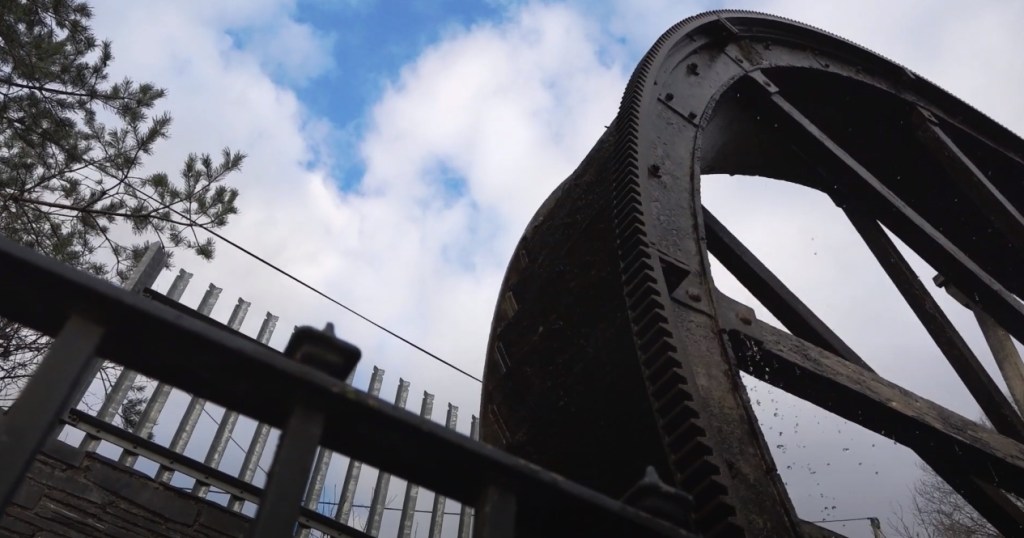
2nd Unit Footage, Water Wheel
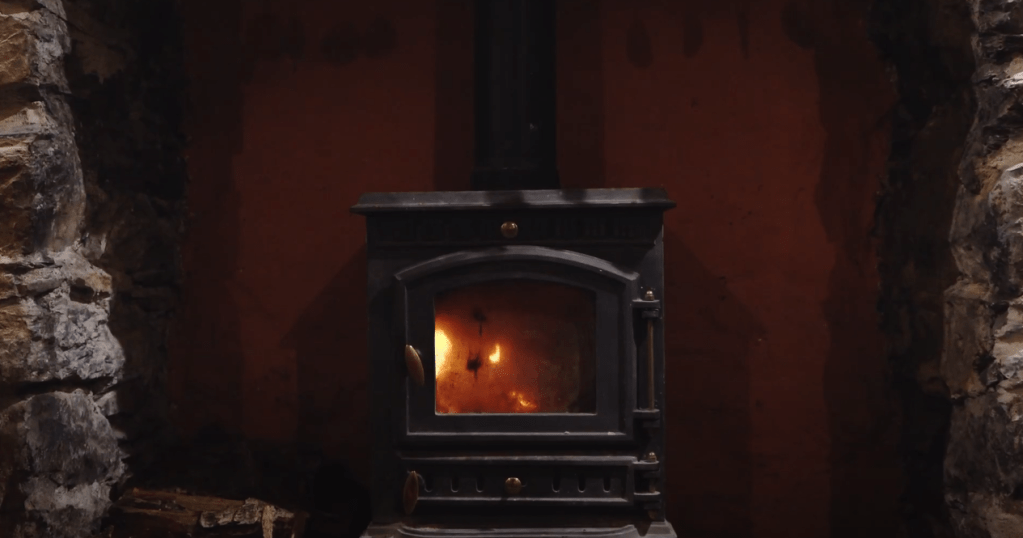
2nd Unit Fooage, Fire Place
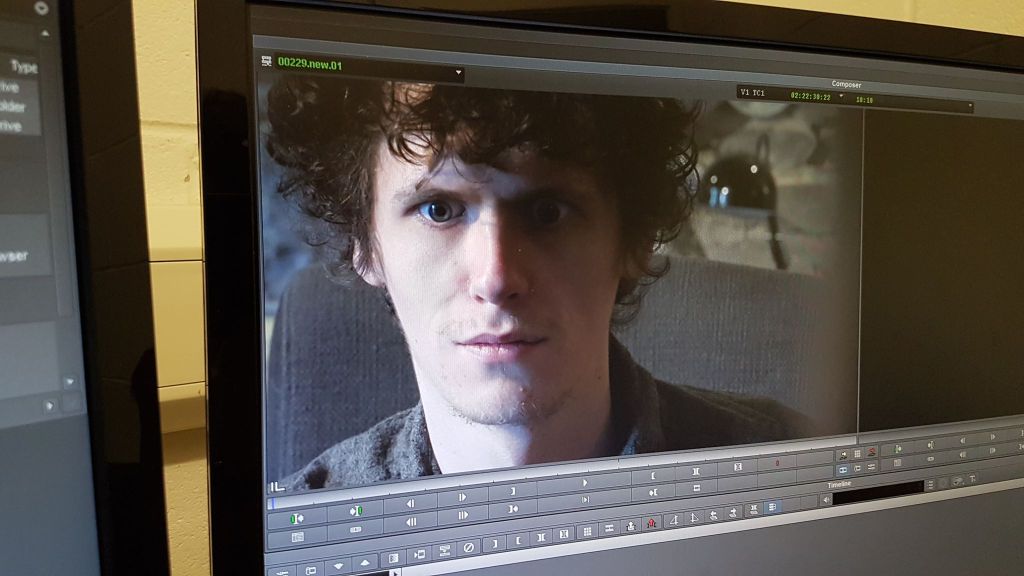
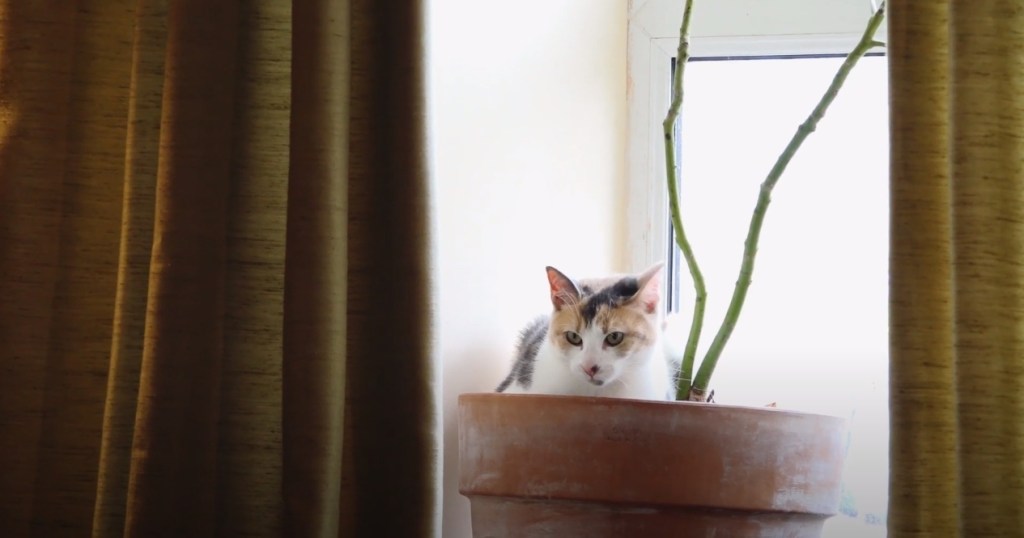
Behind The Scenes Footage, Cat
Because I edited our short film in week 4 and I also had more practice from the Post Production and Editing module since then, the use of Avid Media Composer felt much more comfortable to me this time around and thus the editing itself went much smoother. Due to that and preparation such as watching the footage beforehand and setting up bins, I had a lot more time for the editing itself. This was crucial since experimenting with the structure and when to insert additional footage is key to creating a great montage. I tested out inserts of the second unit footage and the behind the scenes footage, in order to find moments in which they were given the meaning that we wanted to convey. For example, the ever-continuing water wheel representing the always repeating mundane process of the artist and Sisyphus.
However, finding the right timing proved to be quite challenging. I wanted our short film to stay as close to a dialectical montage as possible. But since our approach carried a dramatizing effect with it, this was difficult to achieve. I tried to edit our montage to a music track, with the purpose that it builds a faster pacing. I did this because I thought this could help push the notion of a fast cut dialectical montage. Finding the right track wasn’t easy though. I chose to use The Belt of Faith by Jung Jae-il from the film Parasite (2019). Overall, this was quite helpful, but I do think that the music slows down too much in the middle. If I was to re-do it, I would probably use a different music track that keeps building up the momentum or remains at a steady pacing.
Conclusively, I’m still satisfied with the result of my edit. I improved quite a lot in the use of Avid Media Composer and I definitely look forward to doing more editing, which is surprising to me since I was not a big fan of editing coming into this semester. A dialectical montage is made in the edit and so in this week’s exercise I really got to see the experimental nature of editing. At times, finding the right way to assemble a scene turned out to be a more challenging task than first imagined, but ultimately you gain a lot of experience from it.
Final words on my experienceof this “boot camp”
Over the course of these six weeks I learned a lot about filmmaking and the unique roles. The sentence to sum it all up perfectly is Learning by doing. It was a great experience to work with my crew, as we spent countless hours planning, arguing, shooting and editing together. I feel confident that I have a better idea now, of what it is like to work in the film industry, be it as an editor, as a producer, or in another role.
Unfortunately, due to the current situation surrounding the coronavirus, our “filmmaking boot camp” got cut short by two weeks and we didn’t get to conclude our plans for the next two films. With the current situation, I’m especially grateful that I got to learn a lot about editing and found more appreciation for it. With film sets staying closed for now, editing is one of the few tasks that we can still carry out without much of a change, and so I will definitely continue to work on improving my editing skills.
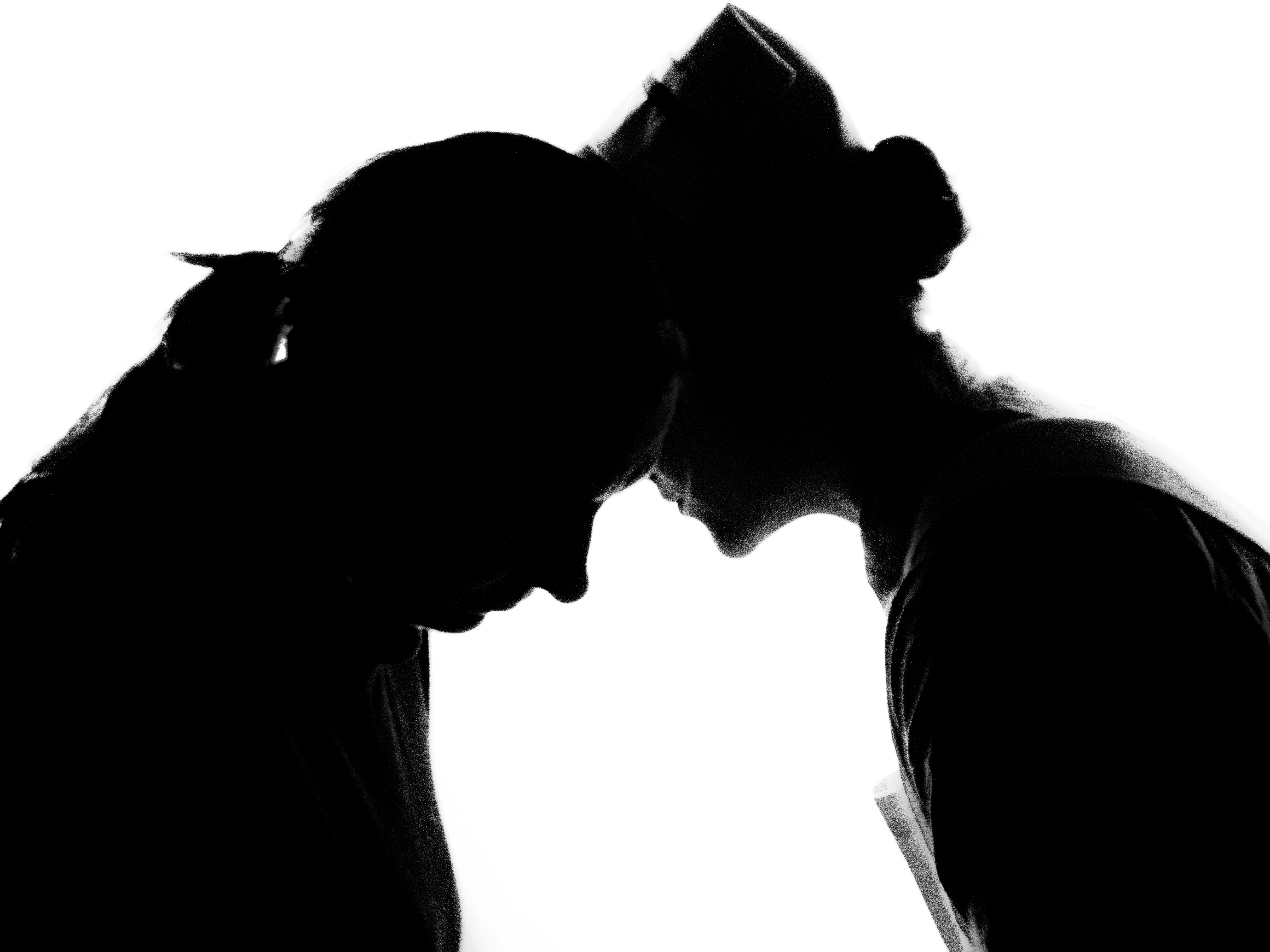
Welcome to week 4, welcome to a black and white video (black and white not like our first video but because of the colour grading). The task for this week was to recreate the scene from Persona (1966) being careful with directing and lighting, being meticulous with planning the shots and the mese-en-scѐne.
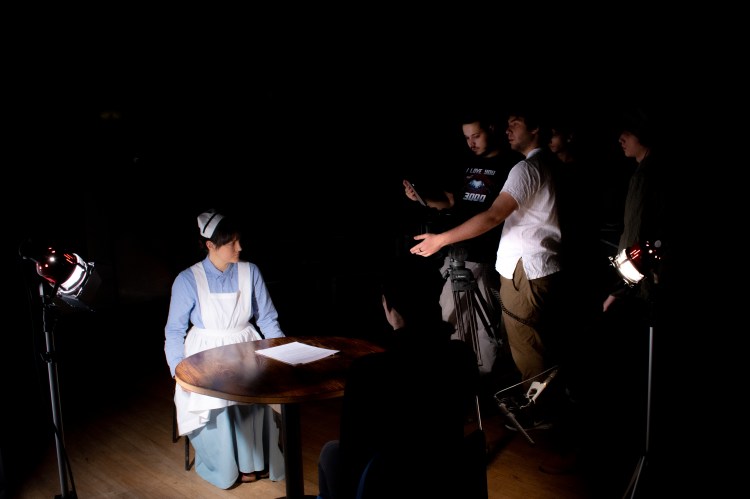
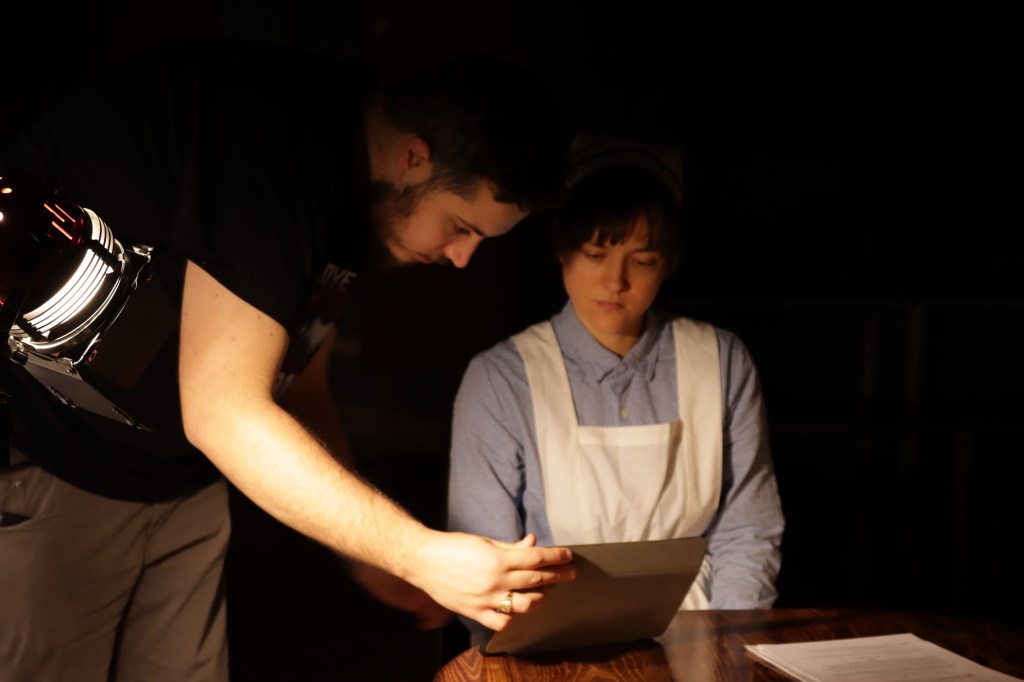
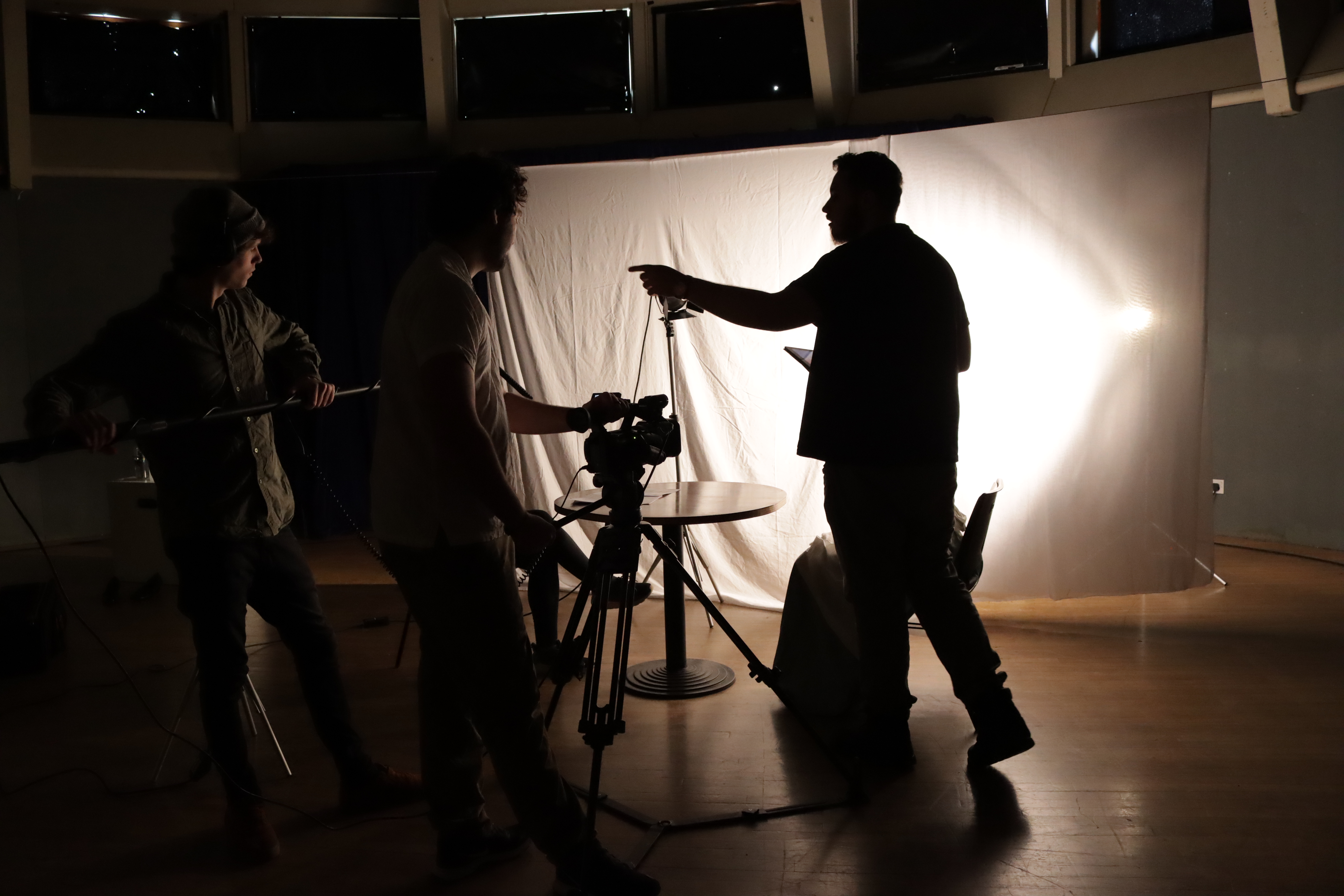
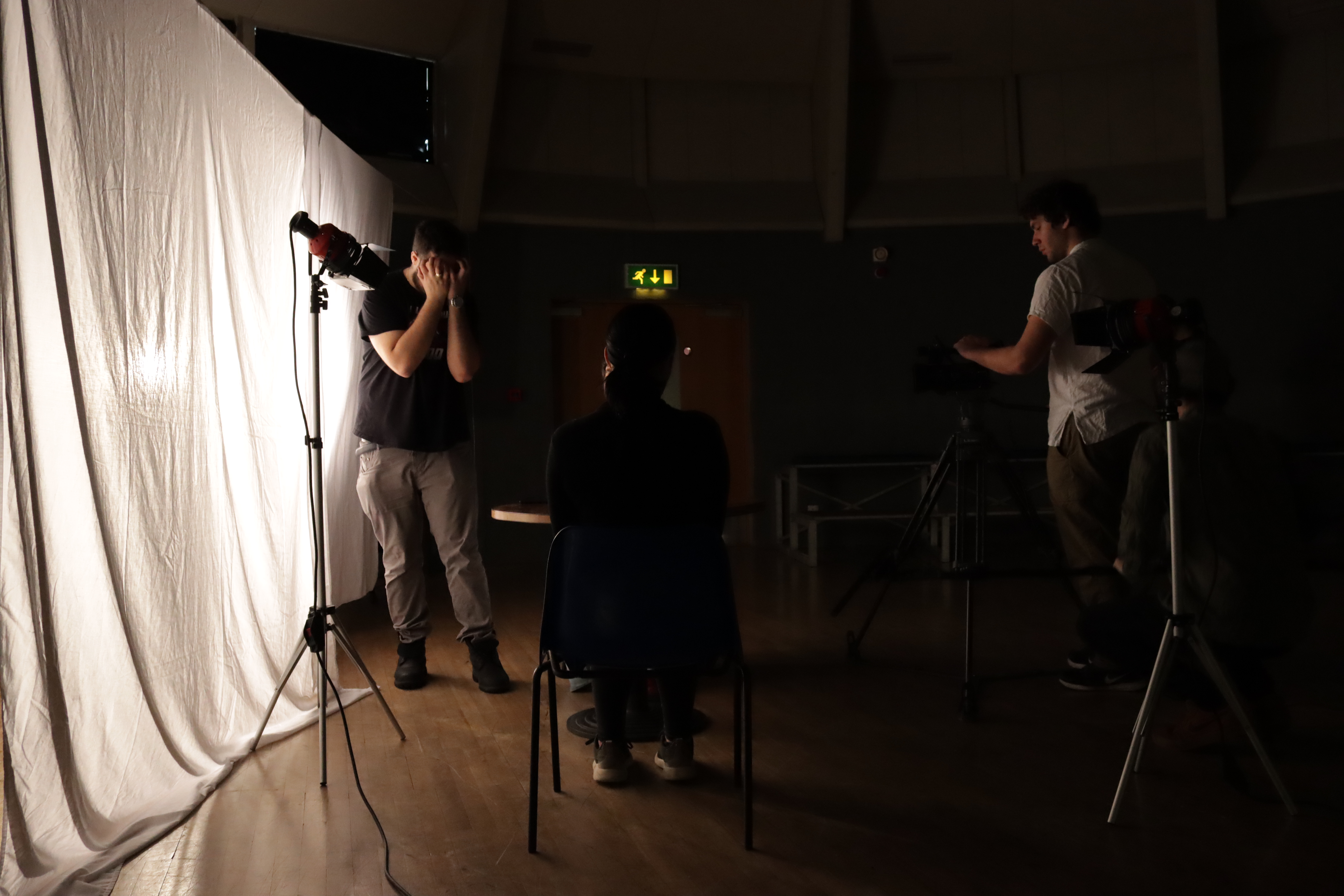
This week I had the role of Director and Colourist. During the phase of pre-production, I prepared my self for this important role, Director. To make sure to convey the emotions and the message of this scene, I watched the video clip several times, analysing the movements, the facial expressions and vocal expressions of the actresses. I wanted to replicate the scene perfectly, maintaining the intention of the message that the original director (Ingmar Bergman) wanted to give. It may seem easy to do but it isn’t. Like for paintings, replicate is, sometimes, more difficult than reinterpreting. For each part of the scene I tried a way to explain to the actresses how I wanted the scene to be; for example, “move your leaps like you are praying, but without doing any noise” or “now you are giving attention to what she saying, now you are starting to give importance to what she is saying”. Lighting was another important detail of this scene, I tried to have big attention this. During the filming day, we spent a lot of time setting the lights, also because it was the first time we worked with lights. What helped me a lot was the storyboard, I always had on my hand the storyboard to use with the cinematographer and the actresses as reference. A big help was having a line producer, have someone that gives you the timing and tells you which shots you have left saves your mental health (and the short film). We had just two hours to film this short movie and we spent a lot of time setting the lights; however, at the end of those two hours, we had all the shots on the drive. During the post-production, I supervised the editing, but what is more important, I did the colour correction and grading. For the first time I used DaVinci Resolve, I used it just once time before to see how to import the sequence from AVID Media Composer and check the interface. For our “persona” we chose (in pre-production) to use the aspect ratio 4:3 (1.33:1), similar to the one in Persona (1.37:1). For this short film, I wanted a black and white and not grey tonalities using a filter. Do a black and white is not easy as it seems, If not do properly you can lose details and have noise (especially in blacks) or burn the image (in whites and bright parts). It wasn’t the first time I did a black and white, as a street photographer I usually edit my pictures in black and white. However, with photos I work on RAW files, this video was shot in REC.709 (it is preferable to have a LOG or RAW file) which is not the ideal for colour correction. I worked on a calibrated monitor using the Black Magic Pad in a dark room, even though for a good colour correction it is the ideal to have walls painted with 18% grey and light at 65K (65000 KELVIN) in a dark room (to make it easier).
From this week I learnt a lot. I learnt the importance of having a storyboard and of having a line producer, I learnt how to work with actors and how to be a quite good Director. I would probably change some shots, like the slapping one and the one with the blood. Overall, I think we worked well and I can say we are proud of it.
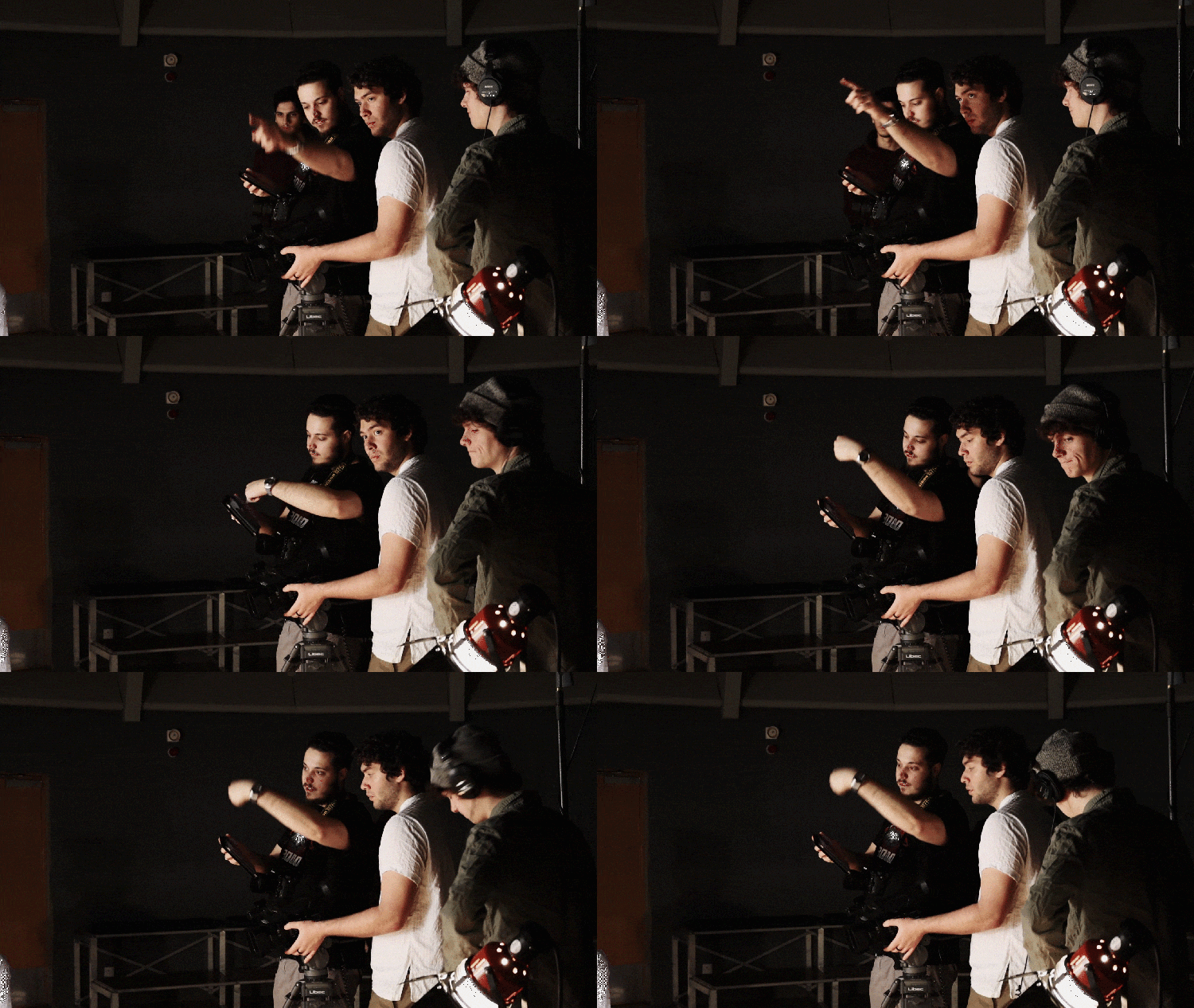
Me (director) talking with the cinematographer using the storyboard as referenceMe explaining the scene
In this week’s exercise Learning through Imitation we had to replicate a scene from Ingmar Bergman’s Persona (1966). I fulfilled the roles of the line producer and the editor. While the focus of this exercise was lighting, my roles brought their own unique challenges. This was also the first time that I was the editor on a short film and not just an overseer in the form of a producer or director.
Part 1: Line Producing
In preparation for this week’s short film I worked closely with Juliette our producer to schedule the shoot. Since she was also starring as the main character of the scene, I took on the role of the line producer so that we had someone on set who can fulfil the responsibilities that usually our producer would have faced.
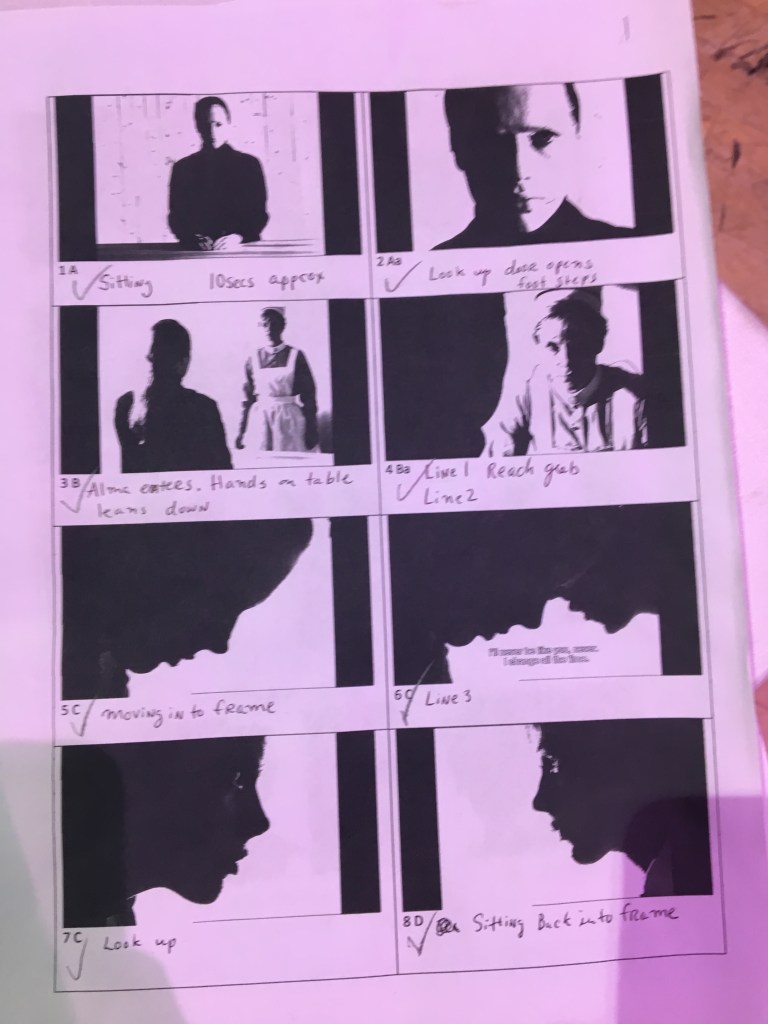
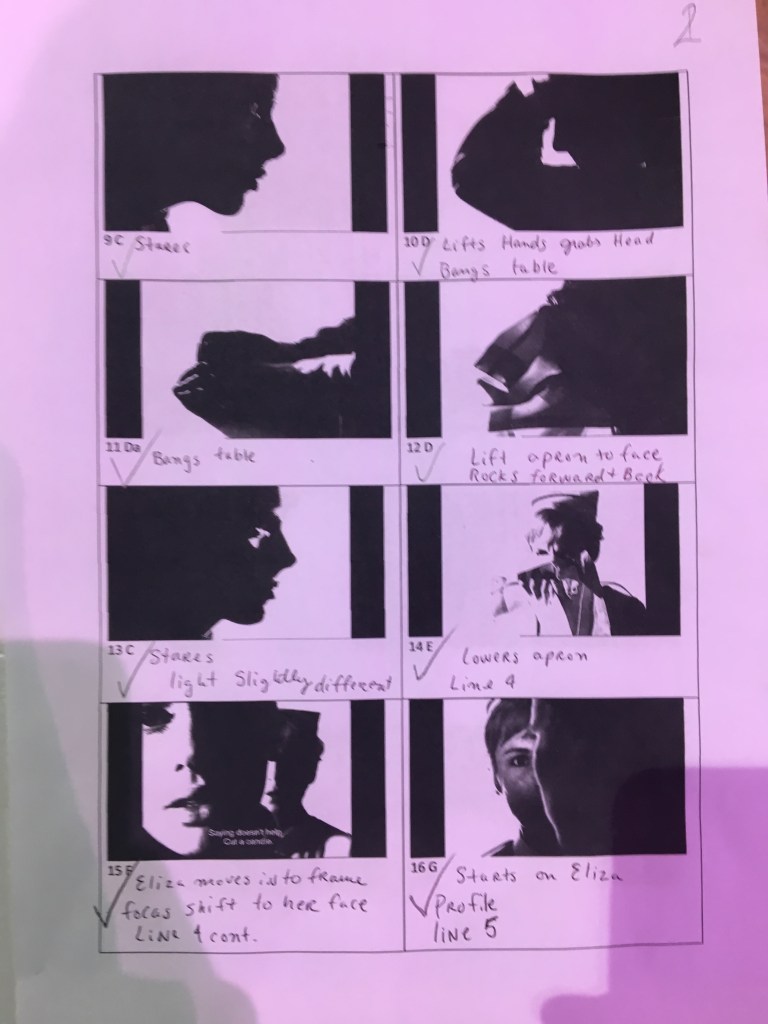
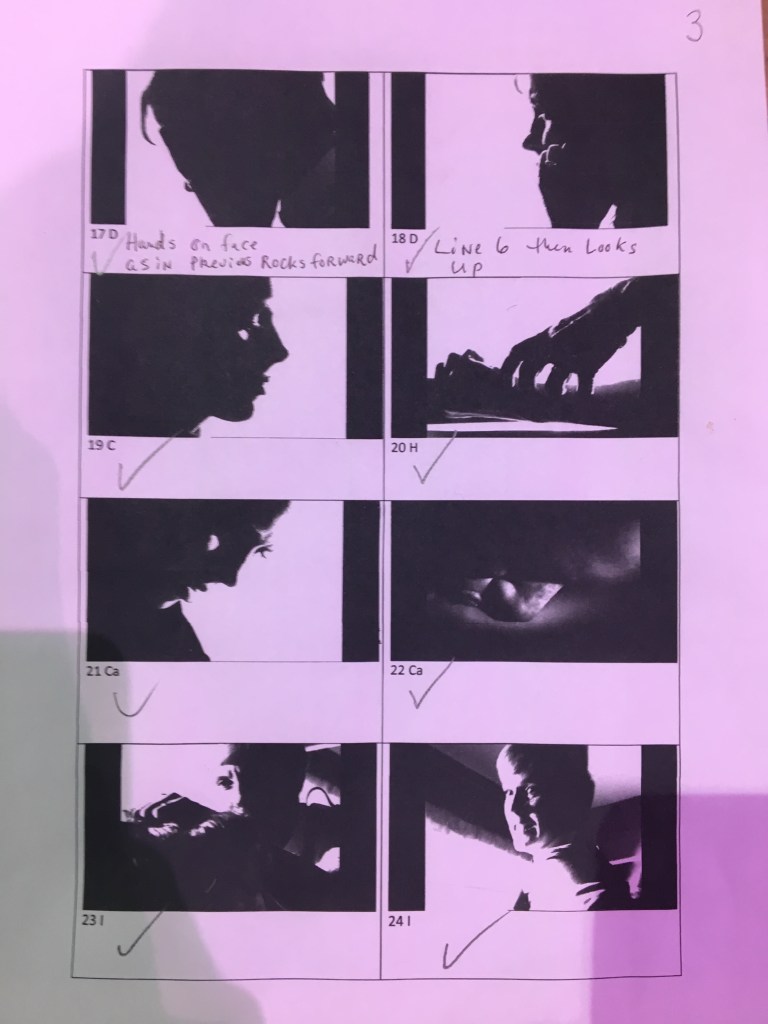
Considering the task, we had to replicate the scene in the two-hour time window that we had for our shoot. In order to create a proper schedule Juliette and I took screenshots of each shot of the scene and used those to create a storyboard. That was a huge help when it came to finding the shoot order. Visualizing all the shots on a few pages made it easier to single out all the unique set-ups of the shots. That way we could group shots that used the same set-ups and schedule them to be shot together. Because of that we didn’t need to spend a lot of time on changing the set-ups in the shoot which was a good step to maximizing our actual shoot time.
Storyboard/Shotlist, page 1
Storyboard/shotlist, page 2
Storyboard/shotlist, page 3
Shoot order / Checklist
The biggest challenge for me as the line producer was the time management during our film shoot. Since this was the first time that we worked with actual lighting equipment and previous to that we only had a bit of theory on lighting, it was very challenging for our crew to find the right position for the lights in order to replicate Bergman’s lighting as closely as possible. Initially this process took considerably longer than anticipated which resulted in our first set-up taking up almost one hour of our two-hour time window. As the person in charge of the schedule and the time management that was quite the stressful hour. I tried to help as much as I could with the lighting set-up to speed up the process and gave our crew ultimatums for when they had to start filming each shot of the first set-up. I ended up giving them a lot more time for the first set-up than originally planned because when we actually were on set I quickly realized that it would be best to give our crew more time in the beginning to help them get accustomed to the new equipment and methods of filming, in order to improve the quality of the results.
In the second hour of the shoot I sped up the production and gave them much stricter time limits since we only shot about a fourth of the footage at that point with only half of the time window remaining. As time went on our crew got better in keeping the time limits for each set-up and in the end, we managed to finish our shoot on time.
This practice was deeply rewarding for me. I got hands-on experience for situations under time pressure where problems arise and things don’t go according to the plan and I had to find ways to work around those, in order to successfully finish the shoot. I think that such an experience is very helpful moving forward since I’m now aware of more possible problems to prepare for in the next pre-production and have more confidence and experience in stressful situations.
Part 2. Editing
Since this was the first time that I was the editor for a short film I had certain concerns going into this week’s exercise. Luckily, I have the Post Production and Editing module this semester as well, so I was able to familiarize myself a bit more with Avid Media Composer by doing editing exercises such as editing different kind of scenes. But until this week I haven’t edited a finished short film and since we only have limited time in the editing suites, I was concerned about finishing the film without rushing the process.
When it comes to editing every single frame matters. The timing of every transition between the shots and the audio must be on point. If it is off by a frame it could break the pacing and drag down the whole film. So being sloppy is not an option. Preparation and structuring are key. If you know your material beforehand and prepare a structure for bins in the editing software, you save a lot of time.
One of the advantages of replicating a scene is that you already have a structure and there is no need for reinventing it or deciding whether a shot is necessary or can be left out. In advance I watched the scene from Persona (1966) a lot of times to get a feeling for the pacing and the transitions between the shots and for the audio transitions. Since the original language of the film was in Swedish and our dialogue in English it was not possible to have every sentence be as long as it was in the original scene because it’s more important to catch the same atmosphere through the delivery of the lines rather than the length.
This meant that I could not just take the exact length of every shot as it was in the original and patch them together. But the pacing still had to be the same. Because of my preparation I knew which shots were given more weight and I knew which ones carried the momentum and which ones had to linger longer on the screen. Through that I was able to find the right length for our shots and managed to keep the original pacing intact.
In order to achieve great editing, you need to know your editing software. Learning an editing software such as Avid Media Composer requires a lot of practice. So finally getting to edit my own entire short film was a great first step to dive deeper into understanding the software and being comfortable with it, as well as seeing a film from the perspective of an editor, requiring those skills and putting them to test. I learned how important the pacing of a scene is in the editing process and saw how vital the timing of each transition is and how impactful a single frame can be.
This week was a lot about time, which is not surprising since we have to create a short film in a short time frame every week. However, my roles this week focused a lot on the management of our limited time and how to get the best out of it. I’m sure my experience in this week will be very helpful in the following weeks and allow us to get more done and have better results in our shoots and during editing.
Welcome back to the blog. This week the exercise was on Mise-en-Scѐne (putting in the scene), one of the most important things in movies. Even this week we had some conditions for both story and filming. The story should be based on someone that takes unfair advantage of temporary absence (in our case the man hypnotized) and abuses the trust of another. What is more, it should have included an unexpected return of a former lover, friend, business partner, or in our case, the professionality between patient and hypnotist. In addition, someone had to turn out to be someone else (the hypnotist turns out to be an impostor). As a result, the development of the characters and their relationship had to be precise. What’s about filming conditions, we had to film in a single location using the essential kit (camera, tripod and microphone), video duration of two minutes without using music.
When I read the script that Juliette wrote, I asked to have the role of the hypnotizer; I always had a desire to learn this science/ability. I started watching videos of mentalist and hypnotists on YouTube trying to understand the way they talk and the movements they do; obviously, I didn’t find the way to hypnotize Aaron (The patient) or someone else. This was for me the first time as an actor, I tried to memorize the lines (I kind of failed) and make them mine.
On the filming day, the first thing we did was to prepare the set. Inspired by Freud’s studio, we decided to give our studio a similar look. Once we finished decorating the studio, we (me and Aaron) tried our lines and the movements with the director (Juliette).
What I learnt from this week, being on the other side of the camera, is that it’s really important for the director to have a clear idea of what he/she is going to do, as an actor, it was essential for me and for my performance to understand her idea. I also understood that I’m not a good actor as I thought, I have to improve my speaking skills, and that my memory is really bad.
The exercise for this week was to produce a short film with no dialogue. The aim was to tell a story using just visual elements and sound effects, no dialogue allowed. What’s more, we had some limitations. First, a limitation on the story; it should be a Pickpocket, The chase or Late again. Other limitations were on the Location (allowed to film only in our department), Equipment (just camera, microphone with its kit and the tripod), and the duration of 2 minutes. We chose Late again; we needed a simple story that was NOT boring
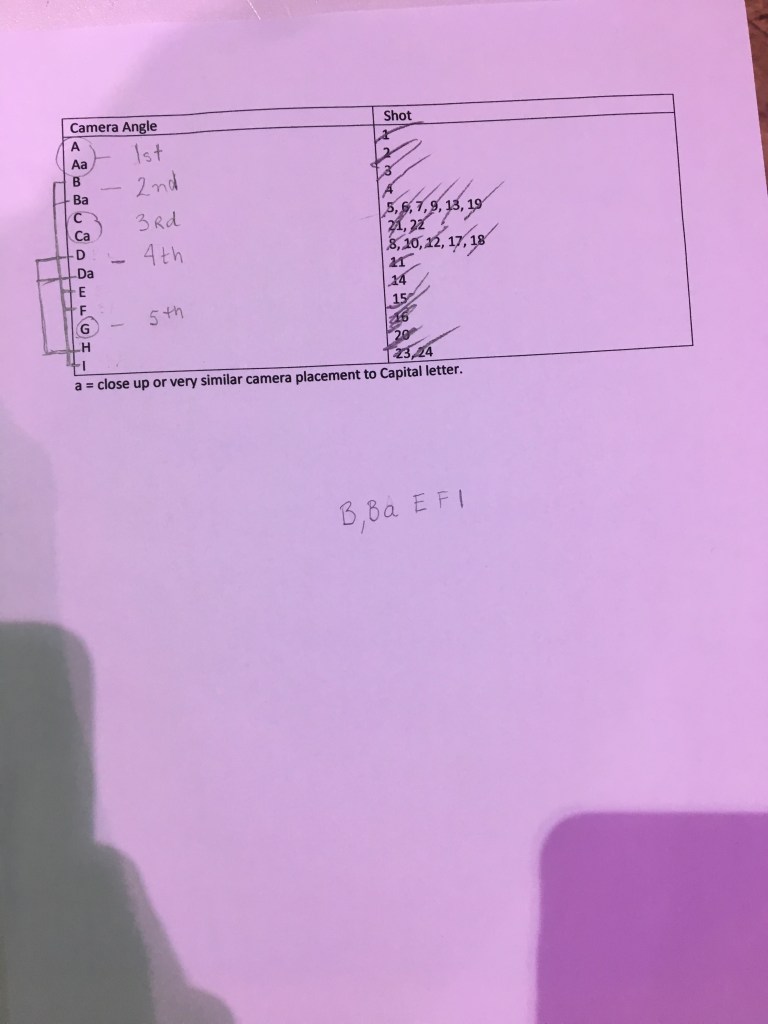
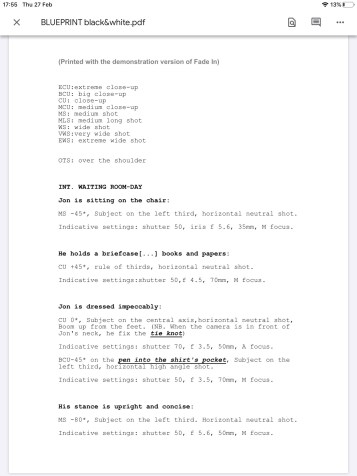
In this week, I was the cinematographer, the role I much prefer. Once the script was ready, I started to work on the blueprint (figure 1) and discuss it with the director (Pettrus). Because we had just two hours to film, in according with the director, I decided to have a good variety of shots (coverage) to provide to the editor instead of working on creative shots that would probably require more time. In the end it turned out to be a wise choice due to a problem we had with the office on the production day.
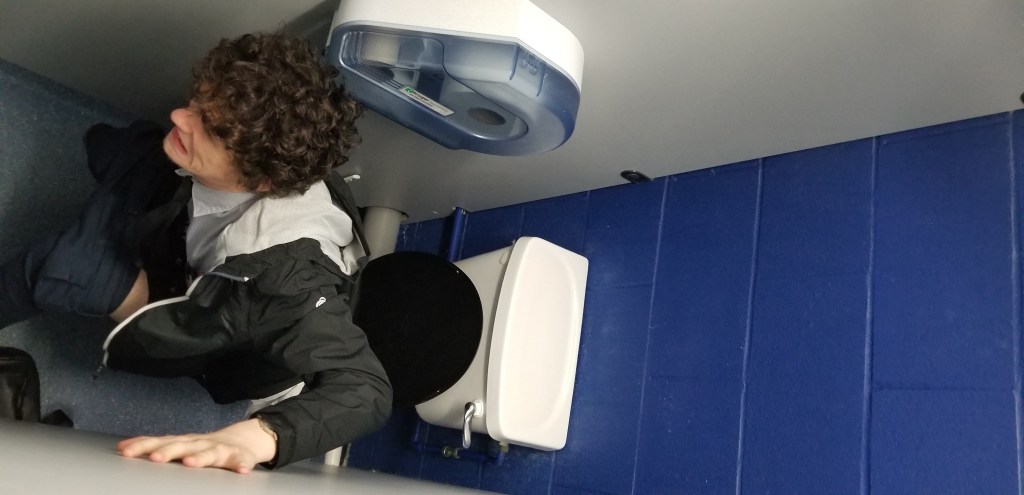
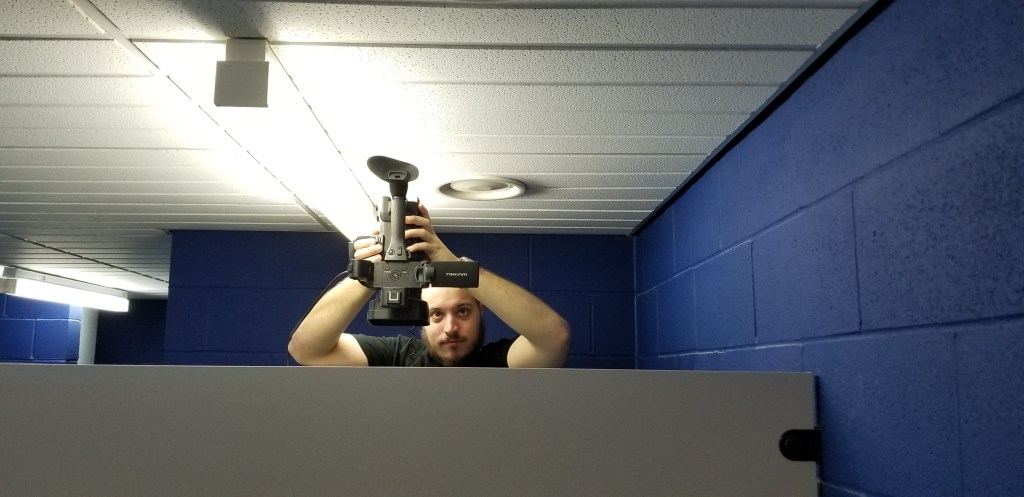
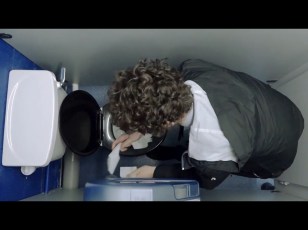
On the filming day, once collected the equipment, we started to shoot a few scenes in the bathroom, but because we had the office from 10:00 to 11:00 we quickly moved to film in the office. Once we arrived in front of the office, the door was locked; the lecturer who use this office forgot that during those hours she had a lecture and to unlock the office for us. We quickly found another office, but we had to change some shots. Once finished to shot in the office we moved back to the bathroom and finished to film the last few scenes. My favourite shot in this short film is the one from above the stall (figure 2 and 3).
In Conclusion, I strictly worked with the director during this production. Even if we were a bit confused and in rush, we got the job done. However, I would personally change a few shots (the one with the “cocaine” and those in the office) but I will keep it “simple” and maybe do the colour correction in DaVinci resolve.

 Diet Coke Productions